If you've ever asked a technical co-founder or agency "is our AWS setup actually good?" and gotten an answer that was hard to evaluate without a technical background yourself, the AWS Well-Architected Framework is the closest thing to an objective answer. It's AWS's own structured methodology for evaluating cloud architecture — and understanding its basic shape, even without technical depth, gives founders a genuinely useful lens for asking better questions of their technical team or development partner.
This guide is part of our broader AWS series, including our complete AWS guide for startups and SMBs, AWS benefits, cost optimization, common cost mistakes, Activate credits, cloud management best practices, getting started with AWS, and choosing the right instance type. This post translates the Well-Architected Framework specifically for founders without a technical background who still need to evaluate whether their infrastructure decisions are sound.
What the Well-Architected Framework Actually Is
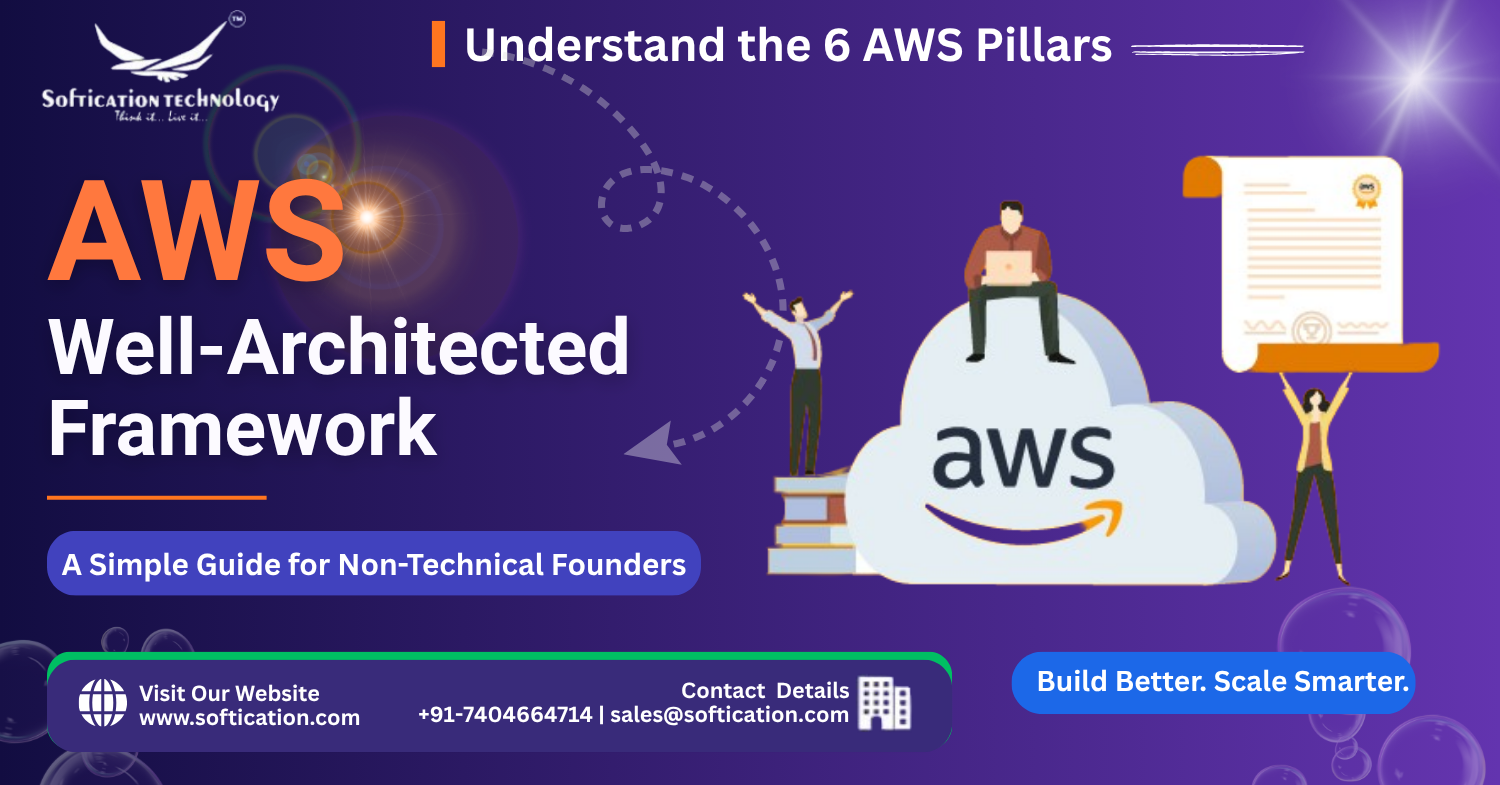
The AWS Well-Architected Framework is a set of questions and best practices, organized into six focus areas (called "pillars"), that AWS developed based on patterns observed across thousands of customer architectures. It's not a certification or a strict rulebook — it's a structured way of asking "have we thought about the right things?" across the dimensions that actually determine whether cloud infrastructure holds up as a business grows.
For a non-technical founder, the value isn't in personally auditing infrastructure against every technical criterion — it's in understanding the six pillars well enough to ask informed questions and recognize whether your technical team or development partner has genuinely considered them, rather than just gotten something running.
The Six Pillars, in Plain English
1. Operational Excellence This pillar asks: can your team actually run and improve this system over time without everything depending on one person's memory? It covers things like documentation, monitoring, and whether processes exist for making changes safely.
What to ask your technical team: "If our lead engineer left tomorrow, could someone else understand and maintain this infrastructure?" A confident, specific answer is a good sign. A vague answer suggests real operational risk.
2. Security This pillar covers protecting data, systems, and assets — access control, data protection, and how the system responds to potential threats. This is the pillar most directly relevant to protecting customer trust and avoiding costly incidents.
What to ask: "Who has administrative access to our infrastructure, and is that access properly scoped and monitored?" If the honest answer involves shared credentials or broad access with no clear record of who can do what, that's worth addressing before it becomes a real problem.
3. Reliability This pillar asks whether the system can recover from failures and meet the availability your business actually needs. It covers redundancy, backup and recovery processes, and how the system handles unexpected disruptions.
What to ask: "What happens if [a specific critical service] goes down — how would we know, and how would we recover?" If there's no clear answer, reliability likely hasn't been deliberately designed for, just assumed.
4. Performance Efficiency This pillar covers using computing resources efficiently and adapting as demand changes — closely related to the instance sizing and scaling topics covered in our guide to choosing the right AWS instance type.
What to ask: "Are we confident our infrastructure is right-sized for actual usage, not just running on whatever was set up initially?" This pillar often surfaces overlap with cost concerns, since inefficient performance and unnecessary cost frequently stem from the same root causes.
5. Cost Optimization This pillar covers avoiding unnecessary spending while still meeting business needs — directly related to the practices covered in our guides on AWS cost optimization and common AWS cost mistakes.
What to ask: "When did we last review whether we're paying for infrastructure we're not actually using?" If the honest answer is "not recently" or "never," this is a low-risk, high-value area to prioritize.
6. Sustainability This pillar, added more recently to the framework, covers minimizing the environmental impact of cloud workloads — relevant for some businesses' ESG commitments or customer expectations, though generally a lower near-term priority than the other five pillars for most early-stage startups.
Why This Framework Matters Even If You're Not Technical
The practical value for a non-technical founder isn't becoming able to personally evaluate infrastructure — it's having a structured vocabulary for a conversation that would otherwise be difficult to have at all. Without some framework, "is our infrastructure good?" is nearly impossible for a non-technical founder to meaningfully evaluate, since the answer depends entirely on trusting whoever built it, with no independent way to probe whether that trust is warranted.
With the six pillars as a reference, you can ask specific, pointed questions across each dimension, and importantly, recognize the difference between a confident, specific answer and a vague one — even without understanding the technical details behind the answer yourself.
Using the Framework in Practice
For founders working with an in-house technical team: Periodically walk through the six pillars together, even informally, as a structured check-in rather than assuming everything is fine by default. This is particularly valuable before a fundraising due diligence process, a significant product launch, or when handling new categories of sensitive customer data, all of which raise the stakes of infrastructure gaps that hadn't previously been surfaced.
For founders working with a development agency or contractor: Ask directly whether they design and evaluate architecture against the Well-Architected Framework, or an equivalent structured methodology. A team that references this proactively, rather than needing to be prompted, is generally a positive signal about their approach to infrastructure quality beyond just "does it currently work."
AWS also offers a formal Well-Architected Review, either self-service through the AWS console or facilitated by AWS or a partner, which walks through detailed questions across each pillar and produces a structured report. For startups preparing for a significant fundraising round, enterprise sales cycle requiring security review, or simply wanting a more rigorous check than an informal conversation, this formal review is worth considering, particularly since it's available at no additional cost through AWS itself.
What This Framework Is Not
It's worth being clear about the limits of this framework, so it's used appropriately: it's not a guarantee of correctness, not a substitute for actual security or compliance audits where those are specifically required (like PCI DSS for payment processing), and not something that replaces genuine technical expertise on your team or partner. It's a structured lens for asking better questions and recognizing gaps — not a checklist that, once completed, means infrastructure is beyond scrutiny.
The Bottom Line
The AWS Well-Architected Framework gives non-technical founders something genuinely useful: a structured way to evaluate infrastructure decisions without needing to personally understand the technical implementation. The six pillars — operational excellence, security, reliability, performance efficiency, cost optimization, and sustainability — cover the dimensions that actually determine whether cloud infrastructure holds up as a business scales, and knowing them well enough to ask pointed questions is a meaningful founder skill in its own right, independent of technical depth. For the broader picture of running AWS well as a startup, see our complete AWS guide for startups and SMBs.
FAQ: AWS Well-Architected Framework
What is the AWS Well-Architected Framework? It's a structured set of best practices and questions, organized into six pillars — operational excellence, security, reliability, performance efficiency, cost optimization, and sustainability — developed by AWS based on patterns observed across many customer architectures, used to evaluate whether cloud infrastructure is soundly designed.
Do I need to be technical to use the Well-Architected Framework? No. Non-technical founders can use the six pillars as a structured vocabulary for asking pointed questions of their technical team or development partner, and for recognizing the difference between confident, specific answers and vague ones, without needing to evaluate technical implementation details personally.
What are the six pillars of the AWS Well-Architected Framework? Operational excellence (can the system be run and improved reliably), security (protecting data and access), reliability (recovering from failures), performance efficiency (using resources appropriately), cost optimization (avoiding unnecessary spend), and sustainability (minimizing environmental impact).
Is the AWS Well-Architected Review free? Yes, AWS offers a Well-Architected Review at no additional cost, either self-service through the AWS console or facilitated by AWS or a qualified partner, producing a structured report evaluating architecture against the framework's six pillars.
When should a startup do a Well-Architected review? Common triggers include preparing for a significant fundraising round, an enterprise sales cycle requiring security review, handling new categories of sensitive customer data, or simply as a periodic check-in to catch gaps before they become costly problems.