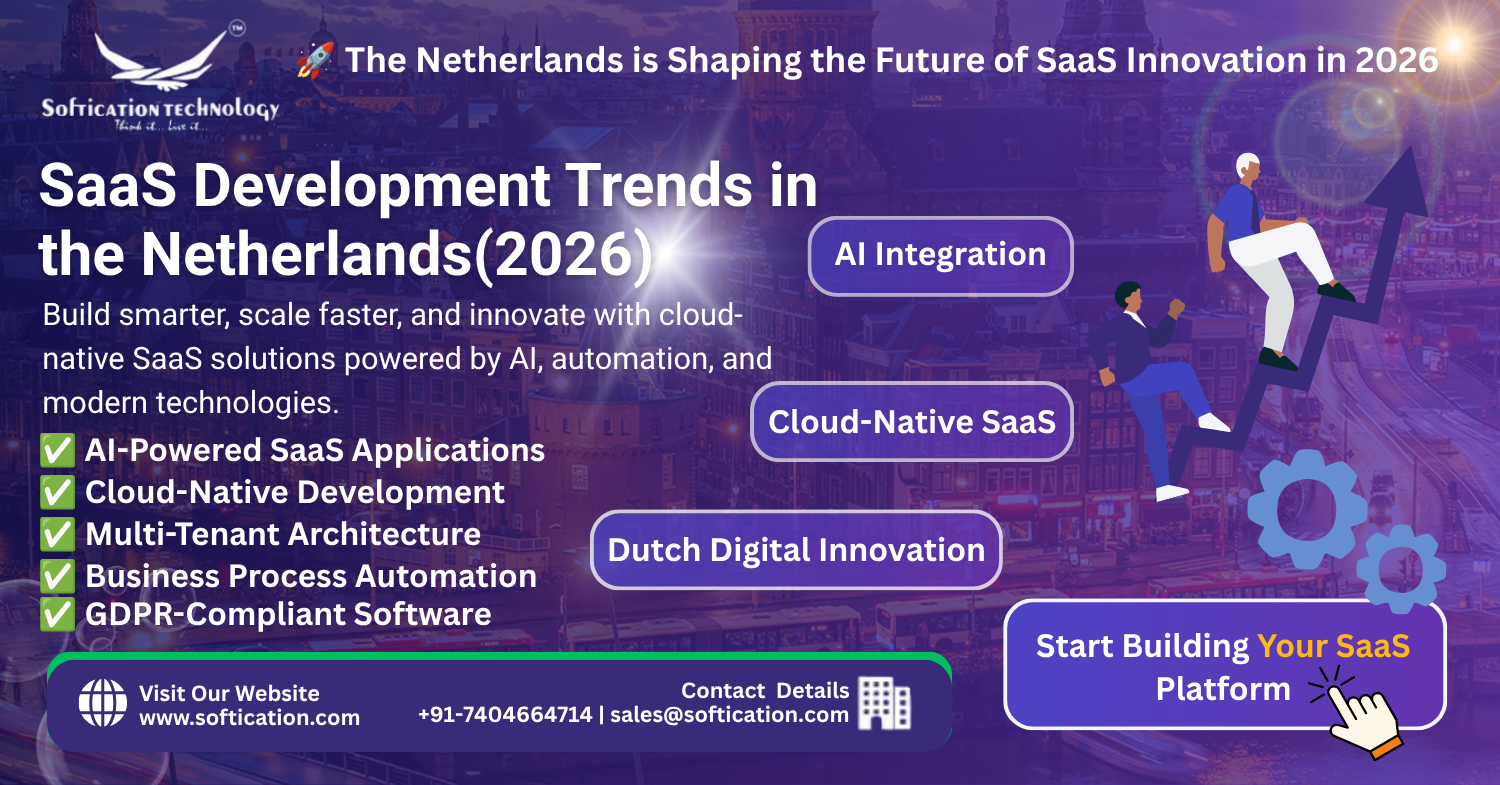
The Netherlands has established itself as one of Europe’s most advanced digital economies. With strong technology infrastructure, widespread cloud adoption, and a thriving startup ecosystem, Dutch businesses are increasingly investing in SaaS (Software as a Service) solutions to accelerate growth, improve efficiency, and remain competitive in a rapidly evolving market.
In 2026, SaaS development continues to be a major driver of digital transformation across industries including fintech, healthcare, logistics, e-commerce, manufacturing, and professional services.
From AI-powered applications to cloud-native software platforms, Dutch organizations are embracing innovative technologies to build scalable, secure, and future-ready solutions.
In this guide, we'll explore the latest SaaS development trends in the Netherlands, emerging technologies, business opportunities, and strategies shaping the future of software development.
Why SaaS Is Booming in the Netherlands
The Netherlands is one of Europe's leading technology hubs due to:
- Strong digital infrastructure
- High cloud adoption rates
- Startup-friendly ecosystem
- Skilled technology workforce
- Growing demand for automation
- Focus on digital innovation
Businesses are increasingly shifting from traditional software models to SaaS platforms because they offer:
✅ Lower infrastructure costs
✅ Faster deployment
✅ Better scalability
✅ Remote accessibility
✅ Subscription-based revenue opportunities
These advantages make SaaS development a strategic investment for Dutch businesses and startups.
What Is SaaS Development?
SaaS development involves creating cloud-based applications that users access through the internet rather than installing software locally.
Popular SaaS solutions include:
- CRM Software
- ERP Systems
- HR Management Platforms
- AI Automation Tools
- Business Analytics Dashboards
- Project Management Software
- Customer Support Systems
Modern SaaS platforms provide flexibility, scalability, and continuous updates, making them ideal for growing businesses.
Top SaaS Development Trends in the Netherlands for 2026
1. AI-Powered SaaS Applications
Artificial Intelligence is transforming SaaS development across the Netherlands.
Businesses are integrating AI into software solutions to improve:
- Customer support
- Sales automation
- Business intelligence
- Workflow optimization
- Predictive analytics
Popular AI Features
✅ AI Chatbots
✅ Smart Recommendations
✅ Predictive Analytics
✅ Automated Reporting
✅ Intelligent Workflows
AI-powered SaaS platforms help organizations make better decisions while reducing manual effort.
2. Cloud-Native SaaS Development
Cloud-native architecture has become the standard for modern software applications.
Benefits include:
- High scalability
- Faster deployment
- Improved reliability
- Better performance
- Cost optimization
Dutch startups increasingly build cloud-first SaaS applications to support long-term growth.
Popular Cloud Platforms
- AWS
- Microsoft Azure
- Google Cloud Platform
Cloud-native development allows businesses to scale globally without infrastructure limitations.
3. Multi-Tenant SaaS Architecture
Multi-tenant architecture remains one of the most important SaaS trends in 2026.
A single application serves multiple customers while maintaining secure data separation.
Benefits
✅ Lower hosting costs
✅ Easier maintenance
✅ Faster updates
✅ Better scalability
Most successful SaaS products in the Netherlands now use multi-tenant frameworks.
4. Low-Code & No-Code SaaS Solutions
Dutch businesses are increasingly adopting low-code and no-code platforms.
These solutions allow organizations to:
- Build applications faster
- Reduce development costs
- Automate workflows
- Launch MVPs quickly
Low-code development is helping startups bring products to market faster than ever before.
5. SaaS Automation & Workflow Management
Business automation is becoming a top priority across industries.
Modern SaaS solutions automate:
- CRM processes
- Invoice management
- HR workflows
- Customer onboarding
- Marketing campaigns
Benefits
- Increased productivity
- Reduced operational costs
- Improved efficiency
- Better customer experiences
Workflow automation is one of the fastest-growing SaaS sectors in the Netherlands.
6. Advanced Analytics & Business Intelligence
Data-driven decision-making is essential for modern organizations.
SaaS analytics platforms help businesses:
- Monitor KPIs
- Predict trends
- Analyze customer behavior
- Improve forecasting
- Generate automated reports
Key Advantages
✅ Faster decision-making
✅ Real-time insights
✅ Better forecasting
✅ Competitive advantage
Companies that leverage analytics gain significant business advantages.
7. API-First SaaS Development
API-first development enables seamless integration between different software systems.
Businesses frequently connect SaaS applications with:
- CRM platforms
- Payment gateways
- ERP systems
- Marketing tools
- E-commerce platforms
API-driven architecture improves flexibility and future scalability.
8. Industry-Specific SaaS Solutions
Generic software is being replaced by specialized industry-focused platforms.
Popular sectors include:
FinTech SaaS
Digital banking and payment solutions.
Healthcare SaaS
Patient management and telemedicine platforms.
Logistics SaaS
Supply chain optimization and fleet management.
E-Commerce SaaS
Online sales automation and customer engagement.
Industry-specific SaaS platforms offer better functionality and competitive differentiation.
9. SaaS Security & Data Protection
Cybersecurity remains a top priority in the Netherlands.
Modern SaaS applications are implementing:
- Multi-factor authentication
- Data encryption
- Access controls
- Security monitoring
- Threat detection systems
Security-focused SaaS development helps businesses protect sensitive customer information.
10. GDPR-Compliant SaaS Platforms
Data privacy continues to be a major requirement for businesses operating in Europe.
Dutch companies prioritize GDPR-compliant software development to ensure:
✅ Legal compliance
✅ Data security
✅ Customer trust
✅ Risk reduction
Privacy-first development is becoming a core SaaS development trend.
Best Technology Stack for SaaS Development
Choosing the right technology stack is essential for building scalable software.
Frontend Development
React
Popular for:
- Fast performance
- Dynamic interfaces
- Scalable architecture
Next.js
Benefits include:
- Better SEO
- Improved speed
- Enhanced user experience
Backend Development
Node.js
Ideal for:
- SaaS applications
- Real-time systems
- API development
Python
Commonly used for:
- AI solutions
- Automation tools
- Data analytics
Laravel
Excellent for:
- Business applications
- CRM systems
- Enterprise platforms
SaaS Development Costs in the Netherlands
Costs vary depending on project complexity.
SaaS MVP Development
Estimated Cost:
€10,000 – €40,000
Mid-Level SaaS Platform
Estimated Cost:
€40,000 – €100,000
Enterprise SaaS Solution
Estimated Cost:
€100,000 – €300,000+
Factors affecting costs include:
- Features
- Integrations
- Cloud infrastructure
- Security requirements
- Development team size
Challenges Facing SaaS Businesses
Despite strong growth opportunities, companies may face challenges such as:
- Increasing competition
- Security requirements
- Scaling infrastructure
- Customer acquisition costs
- Technology selection
Working with experienced SaaS development partners helps reduce these challenges significantly.
Future of SaaS Development in the Netherlands
The Dutch SaaS market is expected to experience substantial growth beyond 2026.
Key drivers include:
- Artificial Intelligence
- Cloud Computing
- Automation
- Industry 4.0
- Data Analytics
- Digital Transformation
Businesses investing in modern SaaS solutions today will be better positioned for long-term success.
Final Thoughts
The Netherlands continues to be one of Europe's most innovative technology markets, making it an ideal environment for SaaS development.
From AI-powered software and cloud-native platforms to workflow automation and GDPR-compliant applications, Dutch businesses are embracing SaaS to improve efficiency, reduce costs, and drive growth.
Organizations that adopt emerging SaaS development trends in 2026 will gain a significant competitive advantage in an increasingly digital economy.
Frequently Asked Questions (FAQs)
What are the biggest SaaS trends in the Netherlands for 2026?
AI-powered SaaS, cloud-native development, workflow automation, analytics platforms, and GDPR-compliant software are among the biggest trends.
Why is SaaS growing in the Netherlands?
Strong digital infrastructure, cloud adoption, startup growth, and increasing demand for automation are driving SaaS expansion.
What is the best technology stack for SaaS development?
React, Next.js, Node.js, Python, Laravel, AWS, and Azure are among the most popular choices.
How much does SaaS development cost in the Netherlands?
Costs generally range from €10,000 for MVPs to €300,000+ for enterprise SaaS platforms.
Why is GDPR compliance important for SaaS companies?
GDPR compliance helps businesses protect user data, maintain trust, and meet European regulatory requirements.
Talk To SaaS Development Experts
Ready to build a scalable SaaS solution?
SoftiCation helps businesses with:
✅ SaaS MVP Development
✅ Cloud-Native Applications
✅ AI-Powered SaaS Solutions
✅ React & Next.js Development
✅ AWS & Azure Infrastructure
✅ GDPR-Compliant Software Development
🚀 Talk To SaaS Development Experts Today
📞 +91-7404664714
🌐 www.softication.com
✉️ sales@softication.com
Build future-ready SaaS solutions designed for growth, innovation, and long-term success.