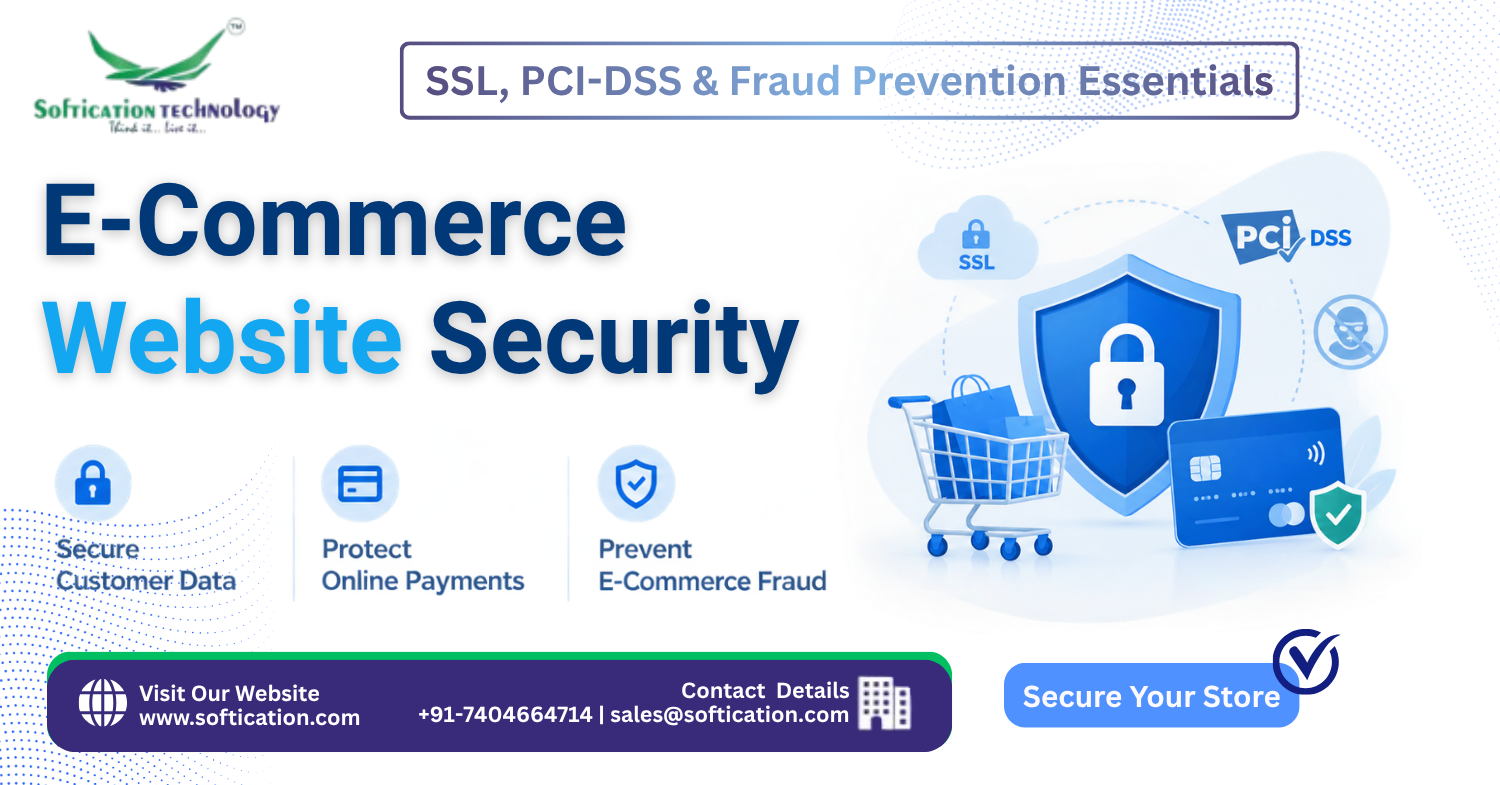
E-commerce security spans three distinct but interconnected layers: encrypting data in transit (SSL/TLS), meeting payment industry compliance requirements (PCI-DSS), and preventing fraudulent transactions before they cost you revenue and chargebacks. Treating these as one undifferentiated "security" concern is how gaps form — each layer has its own specific requirements and failure modes. Here's a practical breakdown of all three.
This post is part of our Web & E-Commerce Development: The Complete Technical Playbook for 2026, and pairs well with our guide on choosing a web development tech stack, since security implementation details vary somewhat by framework and platform.
Layer 1: SSL/TLS Encryption
SSL (and its modern successor, TLS) encrypts data transmitted between a visitor's browser and your server, protecting information like login credentials, personal details, and payment data from being intercepted in transit.
What every e-commerce site needs:
- HTTPS across the entire site, not just checkout. It's a common but outdated pattern to secure only the checkout page while leaving other pages on unencrypted HTTP. Modern best practice, and Google's own ranking guidance, treats sitewide HTTPS as standard, not optional.
- A valid, properly configured SSL/TLS certificate, renewed before expiration — an expired certificate triggers browser security warnings that will immediately drive visitors away, often without them ever discovering it was a simple renewal oversight rather than a genuine security problem.
- Proper certificate configuration, including correct domain coverage (including subdomains, if used) and strong, current cipher suites rather than outdated, deprecated encryption standards.
- HSTS (HTTP Strict Transport Security) header configuration, which instructs browsers to always use HTTPS for your domain, preventing downgrade attacks that attempt to force an insecure connection.
SSL/TLS is genuinely table-stakes at this point — most modern hosting platforms and e-commerce solutions provide it automatically, but it's still worth actively confirming rather than assuming it's correctly configured, particularly after any infrastructure or domain changes.
Layer 2: PCI-DSS Compliance
PCI-DSS (Payment Card Industry Data Security Standard) is a set of security requirements from the major card networks that applies to any business accepting, processing, storing, or transmitting card payment data. It's enforced through your payment processor rather than a government body, but non-compliance carries real consequences — increased transaction fees, liability exposure in the event of a breach, and in serious cases, loss of the ability to process card payments at all.
The single most important practical decision: using a hosted checkout or embedded payment form from a major provider (Stripe, PayPal, or your platform's native checkout) keeps raw card data off your own servers entirely, dramatically reducing your PCI compliance scope. Building a fully custom checkout that directly handles card numbers puts your own infrastructure inside PCI's full audit scope — a significantly higher burden that's rarely justified without a specific business reason.
Compliance requirements scale with transaction volume rather than business size — most early-stage and mid-sized businesses fall into a compliance tier requiring an annual Self-Assessment Questionnaire rather than a formal external audit, but that self-assessment still needs to reflect genuinely sound practices, not just be completed as a formality.
Beyond the checkout itself, broader PCI-relevant practices include maintaining secure network configurations, restricting access to any systems that touch payment-related infrastructure, and having a documented process for handling and reporting potential security incidents.
Layer 3: Fraud Prevention
Fraud prevention is distinct from both SSL and PCI compliance — it's specifically about identifying and stopping fraudulent transactions before they're processed, protecting revenue and avoiding costly chargebacks rather than protecting data confidentiality or meeting compliance requirements.
Common fraud patterns e-commerce businesses face:
- Stolen card fraud — transactions made with stolen card details, often detectable through mismatched billing information, unusual purchase patterns, or velocity signals (many transactions in a short window)
- Account takeover fraud — compromised customer accounts used to make unauthorized purchases, often preventable through strong authentication practices and monitoring for unusual account activity
- Friendly fraud (chargeback fraud) — legitimate purchases later disputed as fraudulent or unauthorized by the actual cardholder, which is harder to prevent proactively but can be mitigated through clear transaction records and communication
- Promo abuse — exploitation of discount codes or promotional offers beyond their intended use, which is more of a business logic concern than a security one, but worth including in a broader fraud prevention strategy
Practical fraud prevention measures:
- Address Verification System (AVS) and CVV verification, which most payment processors support natively, catching a meaningful share of basic card fraud attempts
- Velocity checks, flagging unusual patterns like many transactions from the same card, IP address, or device in a short period
- 3D Secure / Strong Customer Authentication, particularly relevant for European transactions where it's often legally required, adding an additional verification step for card payments that shifts fraud liability away from the merchant in many cases
- Machine learning-based fraud scoring, offered by most major payment processors and dedicated fraud prevention services, which evaluates transactions against broader fraud pattern data beyond what simple rule-based checks can catch
- Manual review queues for transactions flagged as higher-risk, allowing a human decision on borderline cases rather than either blanket-blocking or blanket-approving them
How the Three Layers Work Together
These layers aren't independent — weaknesses in one often create or compound risk in another. A site without proper SSL/TLS configuration undermines the trust signals that support fraud prevention (customers are more cautious, and browsers may flag the site as insecure). Poor PCI compliance practices increase the consequences if fraud does occur, since improperly secured payment data multiplies the damage of any breach. And fraud prevention gaps can create financial losses that no amount of encryption or compliance addresses, since those specifically protect data and process integrity, not transaction legitimacy.
A genuinely secure e-commerce operation treats all three as connected components of the same overall security posture, not as separate boxes to check independently.
A Practical Security Checklist
- HTTPS enabled sitewide, with a valid, properly configured, non-expired certificate
- HSTS header configured to prevent downgrade attacks
- Hosted or embedded checkout used rather than custom card data handling, where possible
- Correct PCI compliance tier identified and Self-Assessment Questionnaire completed if applicable
- AVS and CVV verification enabled through your payment processor
- Velocity checks and basic fraud scoring active, either through your processor or a dedicated fraud prevention tool
- 3D Secure configured if selling into regions where it's commonly required
- A documented process for reviewing flagged transactions and handling potential security incidents
The Bottom Line
E-commerce security isn't a single checkbox — it's three distinct, connected disciplines: encrypting data in transit through SSL/TLS, meeting payment compliance requirements through proper PCI-DSS practices, and actively preventing fraudulent transactions before they cost real revenue. Most of the foundational work here is achievable without deep security specialization, particularly by using established payment providers' built-in tools rather than building custom solutions for problems those providers have already solved reliably. For the broader technical context this fits within, see our complete web and e-commerce development playbook for 2026.
FAQ: E-Commerce Website Security
Does my entire e-commerce site need HTTPS, or just the checkout page? Your entire site needs HTTPS, not just checkout. This is both a security best practice and aligned with Google's ranking guidance — securing only checkout is an outdated pattern that leaves the rest of the site, and visitor trust, unnecessarily exposed.
Does using Stripe or PayPal make my store PCI compliant automatically? Using their hosted or embedded checkout significantly reduces your compliance scope since card data doesn't touch your servers, but you're still required to complete an annual Self-Assessment Questionnaire confirming your broader security practices meet applicable requirements.
What's the difference between PCI-DSS compliance and fraud prevention? PCI-DSS compliance is about securely handling payment card data to meet industry security standards. Fraud prevention is about identifying and stopping fraudulent transactions before they're processed. They're related but distinct — a PCI-compliant store can still experience significant fraud without dedicated fraud prevention measures.
What is 3D Secure and does my store need it? 3D Secure is an additional authentication step for card payments, often legally required under Strong Customer Authentication rules for transactions involving European customers. It can also shift fraud liability away from the merchant in many cases, making it worth considering even where not strictly required.
What are the most effective fraud prevention tools for a small e-commerce business? AVS and CVV verification (usually available by default through your payment processor), velocity checks for unusual transaction patterns, and machine learning-based fraud scoring offered by most major payment processors provide meaningful fraud protection without requiring custom-built fraud detection systems.