Payroll is one of the few business processes where a small, honest mistake can still turn into a legal problem. Underpay an employee because of a manual data entry error, and you're not just facing an awkward correction — you may be looking at a labor law violation, regardless of intent.
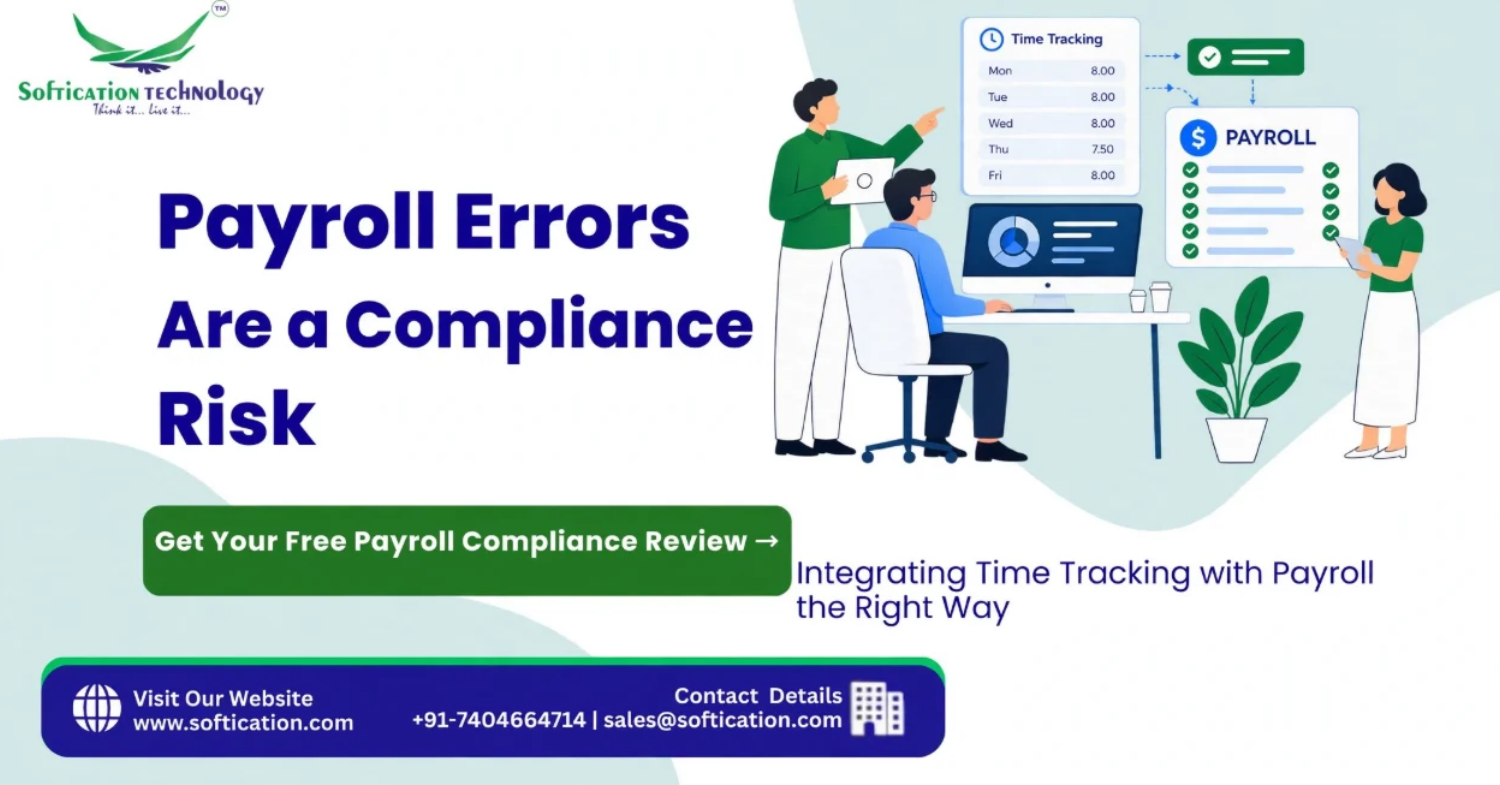
Most payroll errors don't come from payroll software itself. They come from the gap between time tracking and payroll — the manual transfer of hours worked into wages paid. If that handoff isn't properly integrated, errors aren't a matter of if, but when. Here's why that gap is riskier than most businesses realize, and how to close it properly.
The Problem: Time Tracking and Payroll Operating as Disconnected Systems
In many businesses, time tracking and payroll are technically separate systems that don't actually talk to each other. Hours get recorded in one place, and someone manually transfers that data into payroll — often through spreadsheets, manual re-entry, or basic exports that still require human review. This creates predictable failure points:
- Manual data entry errors when transferring hours from a time tracking system into payroll software
- Overtime miscalculations when payroll doesn't automatically apply the correct overtime rules to raw time data
- Inconsistent rounding rules between the time tracking system and payroll processing, creating small but cumulative discrepancies
- Missed edits and corrections — a manager fixes a clock-in error in the time tracking system, but the correction never makes it into payroll before the pay run
- Multi-location payroll complexity, where different sites may follow different pay rules, shift differentials, or local labor law requirements that aren't automatically applied
- Delayed processing when manual reconciliation between systems takes days, pushing payroll deadlines and increasing the chance of rushed, error-prone final checks
- No audit trail connecting recorded hours to the final paycheck, making it difficult to investigate or defend a payroll discrepancy if one is later questioned
Each of these feels like a minor administrative gap in isolation. Collectively, they're the most common source of payroll errors — and payroll errors are rarely treated as minor once an employee, auditor, or regulator notices one.
The Business Consequence: Payroll Errors Are Compliance Violations, Not Just Mistakes
Payroll isn't just an internal accuracy issue — it's regulated, and errors carry consequences well beyond an awkward correction email.
Labor law violations. Underpaying employees — even unintentionally, due to a data transfer error — can constitute a wage and hour violation under labor law, regardless of whether the mistake was deliberate.
Overtime compliance exposure. Incorrectly calculated overtime is one of the most common sources of wage claims and labor department audits, and manual handoffs between systems are a frequent root cause.
Back pay and penalty costs. Correcting a systemic payroll error often means issuing back pay across every affected employee and pay period — plus potential penalties, depending on the jurisdiction and how long the error went uncorrected.
Employee trust erosion. Pay errors — even honest ones — damage trust quickly. Employees depend on accurate, on-time pay, and repeated mistakes signal a lack of operational reliability.
Audit and legal exposure. If payroll records can't clearly demonstrate how recorded hours translated into final pay, defending the business during a labor audit or wage dispute becomes significantly harder.
Administrative cost of corrections. Every payroll error that requires manual investigation and correction consumes HR and finance team time that a properly integrated system would have made unnecessary in the first place.
Reputational risk. Wage and hour violations are a matter of public record in many cases, and repeated payroll issues can affect both employee recruitment and broader business reputation.
Not sure if your current payroll process is exposing you to compliance risk? [Get a Free Payroll Compliance Review →]
The Solution: Properly Integrated Time Tracking and Payroll
The fix isn't better manual processes — it's removing the manual handoff entirely. A properly integrated system connects time tracking and payroll directly, so verified hours flow automatically into accurate pay calculations. This typically includes:
- Direct system integration, where time tracking data feeds payroll automatically, without manual export, re-entry, or reconciliation
- Automated overtime calculation, applying the correct rules based on hours worked, role, and jurisdiction without manual oversight
- Real-time sync for corrections, so any edit made in the time tracking system reflects immediately in payroll before processing
- Built-in compliance rules engines, automatically applying the correct wage, overtime, and break regulations for each employee's location
- Multi-location and multi-rate support, correctly handling different pay rules across sites, roles, or shift types without manual adjustment
- Full audit trails, connecting every dollar paid directly back to the specific recorded hours that generated it
- Exception flagging, automatically surfacing unusual discrepancies (missing clock-outs, unapproved overtime) for review before payroll runs, rather than after
This shifts payroll accuracy from something that depends on manual diligence to something the system enforces by design.
SoftiCation's Capability: We Build the Integration That Closes the Compliance Gap
At SoftiCation, we specialize in connecting time tracking and payroll systems correctly — whether that means integrating your existing tools or building custom logic where off-the-shelf integrations fall short. Our capability includes:
- Payroll system integration — connecting your time tracking platform directly with your existing payroll provider (ADP, Gusto, QuickBooks Payroll, or others)
- Custom compliance rule engines — automated overtime, break, and wage rule enforcement tailored to your specific jurisdictions and workforce structure
- Multi-location payroll architecture — correctly handling varying pay rules, shift differentials, and labor laws across every site you operate
- Real-time data sync development — ensuring corrections made in time tracking are reflected in payroll before processing, not after
- Audit trail and reporting systems — giving you clear, defensible records connecting hours worked to wages paid
- Exception and anomaly detection — automated flagging of payroll discrepancies before they become compliance incidents
- Legacy system integration — connecting modern time tracking tools with existing payroll infrastructure without requiring a full platform replacement
We treat payroll integration as a compliance-critical system, built with the accuracy and auditability that regulatory exposure demands.
Want to know exactly what's creating risk in your current payroll process? [Talk to a Payroll Integration Specialist →]
Proof: What This Looks Like in Practice
Consider a multi-location business where time tracking data was exported weekly from a time clock system and manually entered into payroll software by an administrative team member. Overtime was calculated manually based on a standard formula, which didn't account for jurisdiction-specific rules that varied slightly across the business's operating locations. A routine audit flagged inconsistent overtime calculations across sites, triggering a compliance review and the need for back-pay corrections across several pay periods.
A direct integration was built between the time tracking system and payroll, eliminating the manual export and entry process entirely. A compliance rules engine was configured to automatically apply the correct overtime and wage rules for each location, and any correction made to a time entry synced to payroll in real time, ensuring the final pay calculation always reflected the most current data. An audit trail was built connecting every paycheck directly back to the specific time records that generated it.
Following implementation, overtime calculation errors were eliminated, since the compliance rules engine applied the correct jurisdiction-specific logic automatically rather than relying on a manually maintained formula. Payroll processing time also decreased significantly, since the administrative team no longer needed to manually transfer and reconcile data each pay period, and the business gained a clear audit trail that could demonstrate compliance in the event of a future review.
This reflects the real value of proper payroll integration: it doesn't just reduce administrative workload, it closes the specific compliance gap that manual handoffs between systems create.
Ready to close the gap in your payroll process? [Get Your Free Payroll Integration Assessment →]
Is Your Payroll Process Exposing You to Compliance Risk?
If time tracking and payroll in your business still rely on a manual handoff, the risk isn't hypothetical — it's a matter of when an error occurs, not if. Proper integration removes that risk at the source.
Get a Free Payroll Compliance Consultation and find out exactly where your current process is exposed, and what a properly integrated system would look like for your business.
[Get Your Free Payroll Compliance Consultation →]
Or talk to us directly — we'll walk you through the integration options available for your current systems. 📞 Call/WhatsApp us today to discuss your payroll integration needs.