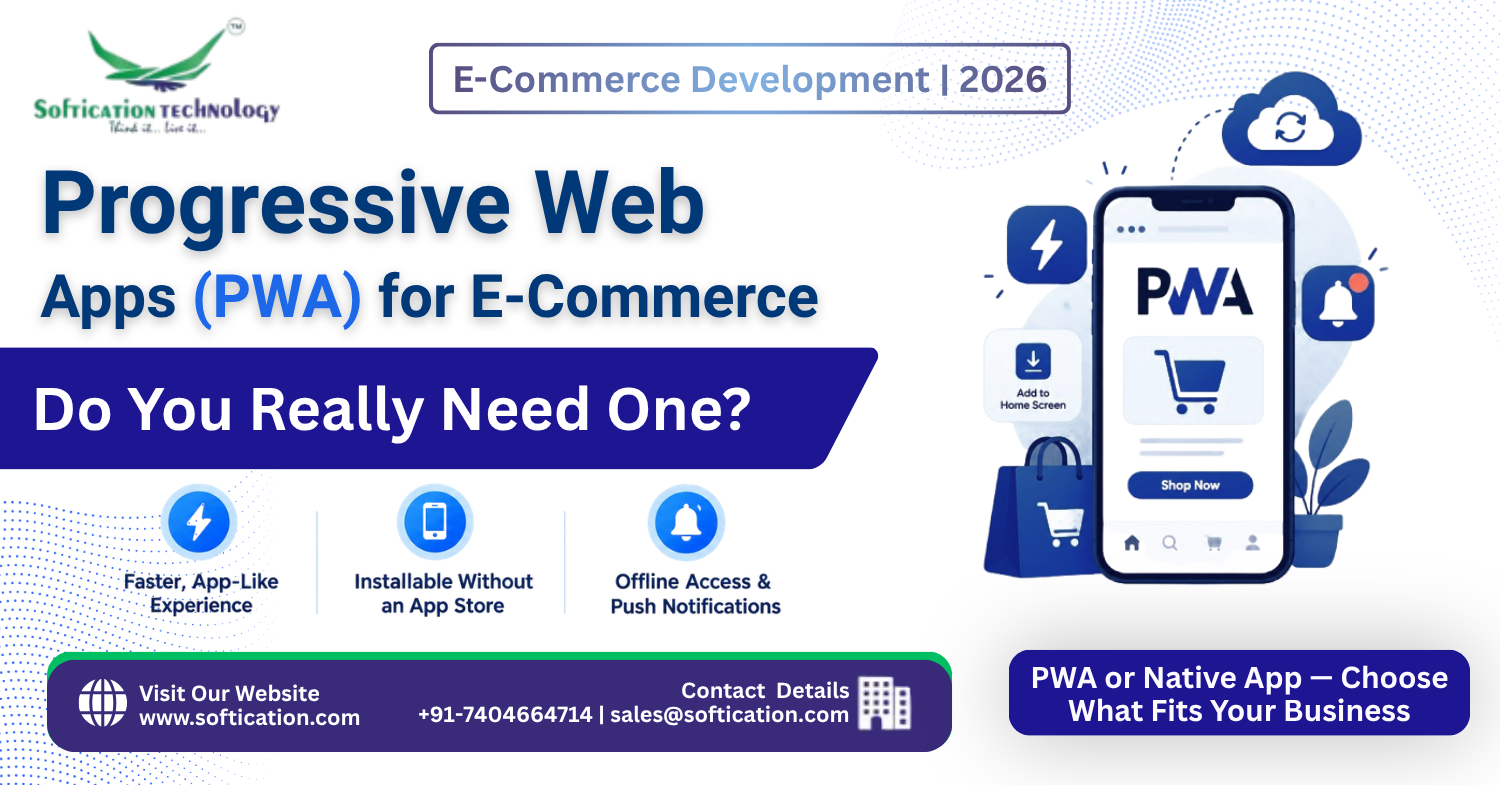

A well-optimized mobile website covers most businesses' needs, but at a certain point — repeat customers, higher-frequency purchases, or a desire for push notifications and a faster checkout experience — a dedicated mobile app becomes worth evaluating. The catch is that app development costs vary even more widely than website development costs, largely because "an app" can mean a simple wrapper around an existing store or a fully native, feature-rich shopping experience. Here's a realistic 2026 cost breakdown by app type and feature set.
This guide builds on our broader e-commerce website development cost guide — if you haven't yet decided whether your business needs a web store, a mobile app, or both, that's the better starting point before diving into app-specific costs here.
Quick Answer: Mobile Commerce App Cost by Type
| App Type | What It Is | Cost Range (USD) | Timeline |
|---|---|---|---|
| Progressive Web App (PWA) | App-like experience built on existing website, installable without app stores | $8,000 – $20,000 | 6–10 weeks |
| Cross-platform app (React Native/Flutter) | Single codebase deployed to both iOS and Android | $20,000 – $45,000 | 10–16 weeks |
| Native iOS + Android (separate builds) | Fully platform-specific apps built independently for each OS | $40,000 – $90,000+ | 14–24 weeks |
| App with advanced features (AR try-on, loyalty, personalization) | Any of the above, plus advanced custom functionality | $60,000 – $150,000+ | 20–32+ weeks |
These ranges assume the app connects to an existing e-commerce backend rather than requiring a new backend built from scratch — a fully new backend adds meaningfully to both cost and timeline.
PWA vs. Cross-Platform vs. Native: What Actually Differs
Progressive Web Apps (PWAs) are the lowest-cost option because they're built using web technologies and installed directly from a browser, without going through app store submission. They offer app-like features — home screen icons, offline access, push notifications on supported devices — while sharing much of the existing website's codebase. The trade-off is more limited access to device-level features and generally less polished performance than a true native app.
Cross-platform apps (built with frameworks like React Native or Flutter) use a single shared codebase to deploy to both iOS and Android, which significantly reduces cost compared to building two fully separate native apps. Performance and access to device features are better than a PWA, though still not quite equivalent to fully native development for the most demanding use cases.
Native apps, built separately for iOS (Swift) and Android (Kotlin), offer the best possible performance and full access to platform-specific features, but effectively double development effort since two independent codebases need to be built, tested, and maintained. This is typically reserved for large-scale retailers where performance at high transaction volume genuinely justifies the added cost.
What Drives Mobile App Cost Up or Down
1. Backend integration complexity An app connecting to an existing, well-documented e-commerce backend (Shopify's API, WooCommerce REST API) is significantly cheaper than one requiring custom backend work or integration with legacy internal systems.
2. Feature scope Core shopping functionality — browse, cart, checkout, order history — is standard across most builds. Advanced features like AR-based product try-on, personalized recommendations, loyalty program integration, or in-app customer support chat each add meaningful scope.
3. Design complexity A functional, clean design following platform conventions (Apple's Human Interface Guidelines, Google's Material Design) is faster and cheaper to build than a highly custom, brand-specific interaction design requiring extensive custom UI work.
4. Payment and checkout integration Supporting Apple Pay and Google Pay alongside standard card payment adds development work but is close to a baseline expectation for mobile commerce apps in 2026, given how significantly they reduce checkout friction on mobile devices.
5. Push notification and marketing infrastructure Basic push notifications are relatively low-cost to implement. Segmented, behavior-triggered notification campaigns (abandoned cart reminders, personalized promotions) require more backend logic and marketing platform integration.
6. App store compliance and review Both the Apple App Store and Google Play have specific technical and content requirements, and initial submissions are sometimes rejected and require revisions — this adds variable but real time to the launch timeline that's worth budgeting for.
Is a Mobile App Actually Necessary for Your Business?
Not every e-commerce business needs a dedicated app, and building one prematurely is a common way budget gets spent without proportional return. A few questions worth answering honestly first:
- Do you have meaningful repeat purchase behavior? Apps deliver the most value for businesses with frequent, recurring customer visits — subscription products, consumables, or high-frequency categories. Low-frequency, one-time-purchase businesses often see limited return on app investment.
- Is your mobile website currently underperforming? If mobile conversion rates on your existing site are strong, a PWA may capture most of the app-like benefit (installability, notifications) at a fraction of native app cost.
- Do you have a plan to actually drive app installs? An app that customers don't install and open regularly delivers no value regardless of how well it's built — install and retention strategy should be planned before development, not treated as an afterthought.
For many businesses, particularly those without a well-optimized mobile web experience already, investing first in mobile web performance delivers more return than jumping straight to native app development.
Real Cost Example
A mid-sized specialty retailer with an existing Shopify store wanted a mobile app to drive repeat purchases among an already-engaged customer base, with push notifications for restocks and personalized promotions.
- Type: Cross-platform app (React Native), connected to existing Shopify backend
- Features: Browse/cart/checkout, Apple Pay/Google Pay, push notifications, loyalty points display
- Timeline: 13 weeks
- Team: 1 project lead, 2 mobile developers, 1 designer (part-time)
- Total cost: $32,000
This is a representative Standard-tier mobile commerce build — enough functionality to meaningfully improve the repeat-customer experience, without the cost of fully native, dual-platform development.
The Bottom Line
Mobile e-commerce app costs in 2026 range enormously because "an app" isn't one thing — a PWA, a cross-platform app, and a fully native build solve different problems at different price points. The right choice depends on how customers actually shop with your business, not on which option sounds most impressive. For most mid-sized e-commerce businesses without a specific case for native performance, a cross-platform app connected to an existing backend delivers the strongest balance of cost, timeline, and functionality. For a broader view of how app investment fits into overall e-commerce strategy and budget, see our complete guide to e-commerce website development.
FAQ: Mobile E-commerce App Development Cost
How much does it cost to build an e-commerce mobile app in 2026? Costs range from $8,000–$20,000 for a Progressive Web App, $20,000–$45,000 for a cross-platform app, and $40,000–$90,000+ for fully native iOS and Android apps, depending on feature scope and backend integration complexity.
What's the difference between a PWA and a native e-commerce app? A PWA is built with web technologies and installed directly from a browser without app store submission, offering app-like features at lower cost. A native app is built specifically for iOS or Android, offering better performance and full device feature access, but at significantly higher cost since it typically requires separate development for each platform.
Is a cross-platform app cheaper than building separate iOS and Android apps? Yes, generally significantly cheaper, since cross-platform frameworks like React Native or Flutter use a single shared codebase for both platforms rather than requiring two fully independent native builds.
Does my e-commerce business need a mobile app? It depends on repeat purchase behavior and current mobile web performance. Businesses with frequent, recurring purchases tend to see the strongest return on app investment, while businesses without an install and retention strategy, or without already-strong mobile web conversion, may see limited value relative to cost.
How long does it take to build and launch an e-commerce mobile app? Typical timelines run 6–10 weeks for a PWA, 10–16 weeks for a cross-platform app, and 14–24 weeks or more for fully native apps, with additional time to account for app store review and potential resubmission after Apple or Google feedback.