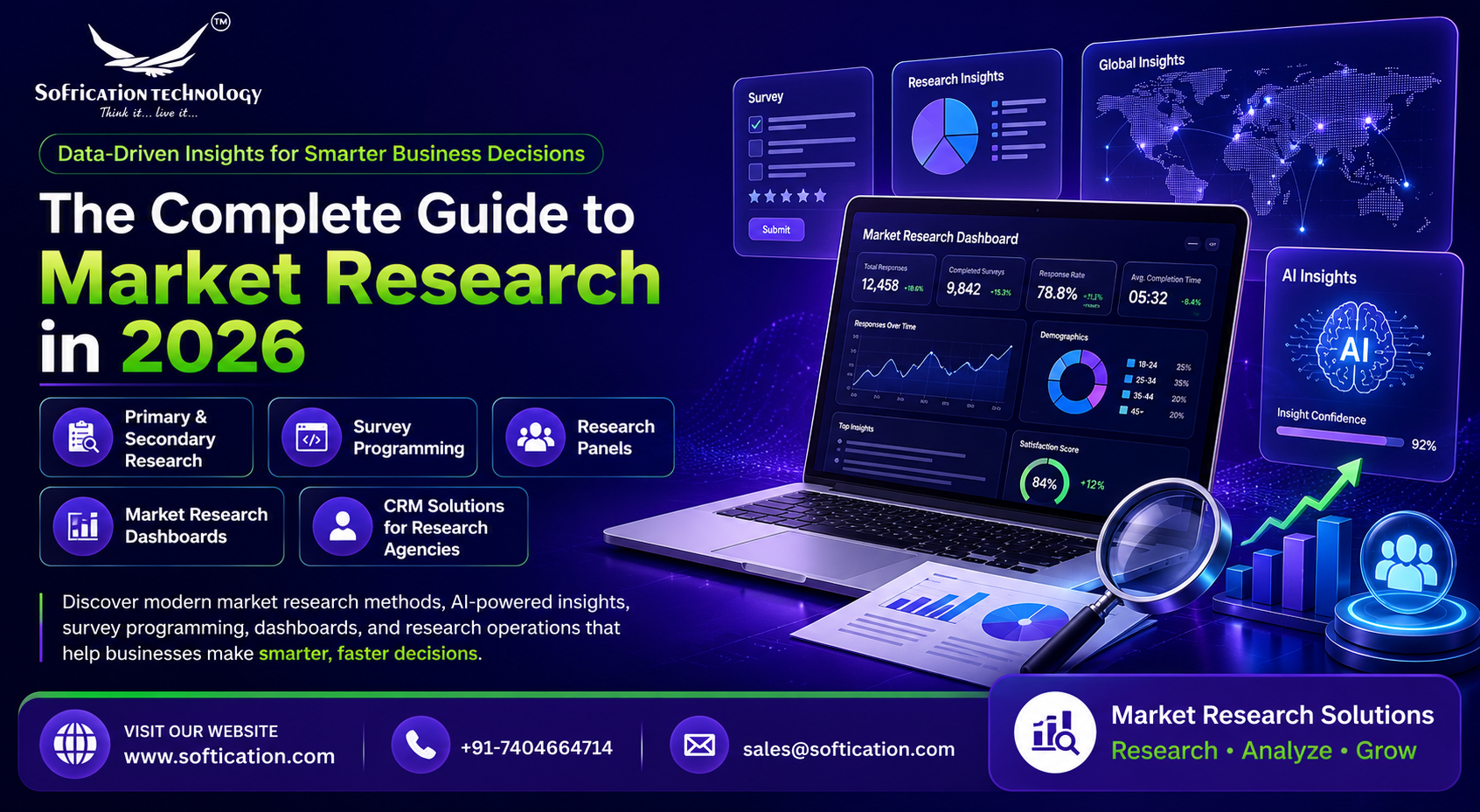
Market research has changed more in the last five years than it did in the previous twenty. What used to mean paper surveys, phone interviews, and weeks of manual data-crunching is now a real-time, software-driven discipline. Agencies and brands that still rely on spreadsheets and disconnected tools are falling behind competitors who use integrated panels, dashboards, and automation to move faster and make smarter decisions.
This guide walks through everything you need to know about modern market research in 2026 — what it is, why it matters, the different types of research, and the technology stack (panels, dashboards, survey programming, and CRM systems) that today's research agencies depend on to stay competitive.
What Is Market Research?
Market research is the systematic process of gathering, recording, and analyzing information about a target market, its customers, and the competitive landscape. At its core, it answers three questions every business needs to know before making a decision:
- Who are our customers, and what do they actually want?
- How is the market shifting, and where are the opportunities?
- What are competitors doing well — and where are they falling short?
Without this information, businesses are essentially guessing. With it, they can build products people want, price them correctly, and market them to the right audience.
Why Market Research Matters More in 2026
Three forces have made research more important — and more complex — than ever:
- Faster product cycles. Companies launch and iterate faster, so research needs to keep pace instead of taking months.
- Fragmented data sources. Insights now come from surveys, panels, social listening, app analytics, and third-party data — all of which need to be unified.
- Client and stakeholder expectations. Clients want live dashboards and instant answers, not static PDF reports delivered weeks later.
This is why the tools around research — panels, dashboards, and survey programming — matter just as much as the research methodology itself.
Types of Market Research
Primary vs. Secondary Research
- Primary research is data collected directly from the source — through surveys, interviews, and focus groups. It's tailored to your exact question but takes more time and resources.
- Secondary research uses existing data — industry reports, published studies, government data — that's faster and cheaper to access, though less specific to your unique problem.
Qualitative vs. Quantitative Research
- Qualitative research explores the "why" behind behavior — motivations, emotions, and perceptions — usually through interviews, focus groups, and open-ended questions.
- Quantitative research measures the "how many" and "how much" — using structured surveys and statistical analysis to produce numbers you can track over time.
Hard vs. Soft Research Data
- Hard data is numerical and demographic — purchase frequency, market size, income brackets. It tells you what is happening.
- Soft data captures experience, emotion, and psychological connection to a brand. It tells you why it's happening.
The best research programs combine both: hard data to spot the trend, soft data to understand the human reason behind it.
The Modern Market Research Tech Stack
Methodology hasn't fundamentally changed — but the infrastructure supporting it has. Here's what a modern research operation looks like in 2026.
1. Market Research Panels
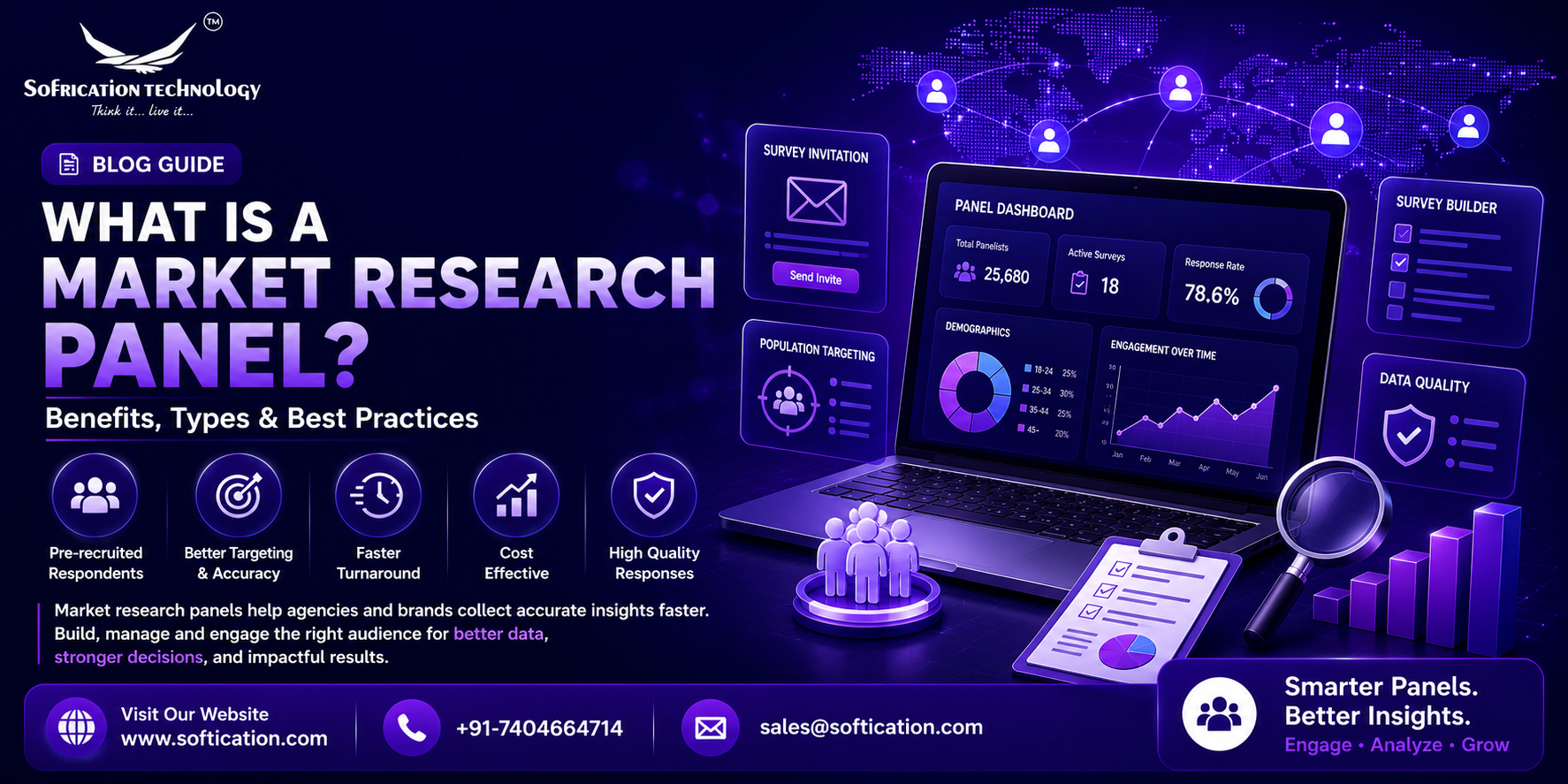
A panel is a pre-recruited group of respondents who agree to participate in ongoing studies. Instead of recruiting from scratch for every project, agencies draw from an existing, profiled pool of participants — which means faster turnaround and more reliable, consistent data over time.
A good panel management platform should let you:
- Recruit participants with customizable targeting criteria
- Segment your panel by demographics, behavior, or past participation
- Distribute surveys via email, SMS, or embedded links
- Track engagement and prevent respondent fatigue
2. Market Research Dashboards
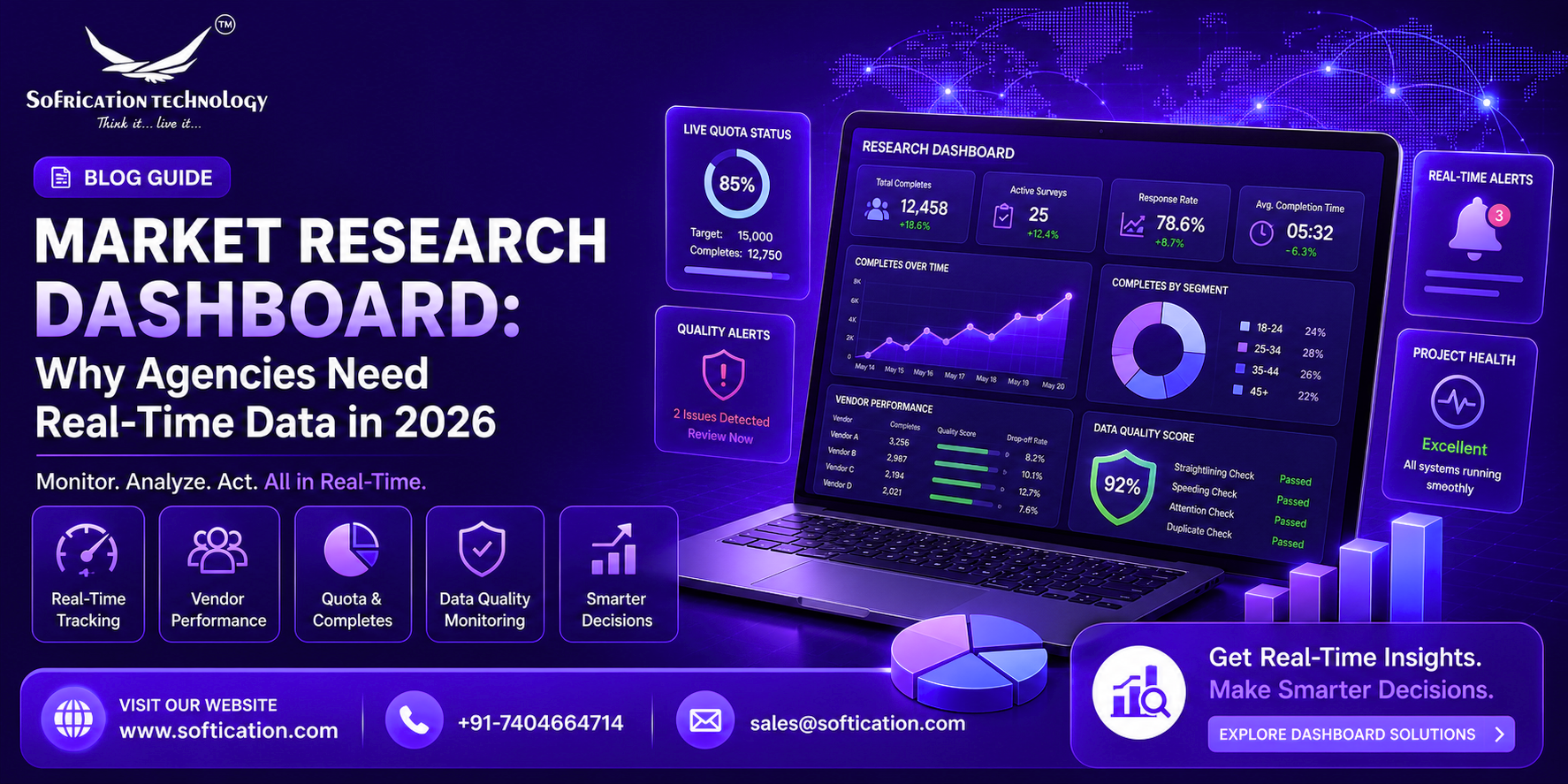
A dashboard turns raw survey and panel data into something a human can actually act on. Instead of static spreadsheets, a modern dashboard gives you:
- Real-time visibility into project status, response rates, and data quality
- Visualizations that make trends and outliers obvious at a glance
- The ability to manage multiple research projects side by side without losing centralized oversight
- Integration with external data sources — CRMs, survey platforms, and social channels — so nothing lives in a silo
For agencies managing several clients at once, a dashboard isn't a nice-to-have anymore; it's the command center the entire operation runs through.
3. Survey Programming
Behind every clean dataset is a well-programmed survey. Survey programming has become its own specialized discipline, involving:
- Logic and branching — showing respondents different questions based on prior answers
- Quota management — ensuring the right number of responses per demographic segment
- Multilingual and localized surveys — critical for global research projects
- Mobile-responsive design — since most respondents now complete surveys on their phones
- Data validation — catching low-quality or fraudulent responses before they pollute your results
Poorly programmed surveys are one of the biggest (and most avoidable) sources of bad data in research today.
4. Research-Specific CRM & Operations Software
As agencies scale, generic CRMs and spreadsheets start to break down. Managing multiple clients, dozens of vendors, redirect links, invoicing, and project timelines requires a system built specifically for research operations — not a repurposed sales CRM. The modules that matter most for research agencies typically include:
- Client management (briefs, history, communication logs)
- Vendor coordination and quota/payment tracking
- Project tracking from kickoff to delivery
- Redirect management for survey traffic
- Invoice automation for clients and vendors
- Team attendance and productivity tracking
Agencies that consolidate these functions into one platform save significant time and reduce the operational errors that come from juggling five different tools.
How to Choose the Right Market Research Tools
When evaluating panel, dashboard, survey, or CRM software, ask:
- Does it scale? Can it handle a single small project today and thousands of daily respondents next year?
- Does it integrate? Can it pull in data from your existing survey platforms, CRM, and analytics tools?
- Is it built for research specifically, or is it a generic business tool stretched to fit?
- Does it offer real support and training, or are you left to figure it out alone?
- Is data quality and transparency built in, so you can trust — and prove — your results?
Common Mistakes in Market Research
- Relying on a single data source. Combining panel data, analytics, and qualitative feedback gives a far more accurate picture than any one source alone.
- Ignoring data quality checks. Bad respondents and rushed answers can quietly skew an entire study.
- Using disconnected tools. Spreadsheets, email threads, and standalone survey tools create blind spots and slow everything down.
- Treating research as a one-time project. The most valuable insights come from panels and dashboards tracked continuously, not a single snapshot in time.
Final Thoughts
Market research in 2026 isn't just about asking the right questions — it's about having the right infrastructure to collect, manage, and act on the answers quickly. Panels give you reliable access to respondents. Dashboards turn data into decisions. Survey programming ensures the data you collect is actually trustworthy. And a research-specific CRM ties the whole operation together as you scale.
Agencies that invest in this stack aren't just doing research faster — they're building a durable competitive advantage.
Frequently Asked Questions
1. What is the difference between a market research panel and a regular survey audience? A panel is a pre-recruited, profiled group of respondents who participate in research on an ongoing basis, which means faster deployment and more consistent, trackable data over time. A one-off survey audience is recruited fresh for each project, which takes longer and offers less continuity.
2. How does a market research dashboard help my agency? A dashboard centralizes data from multiple projects, respondents, and traffic sources into real-time visualizations. Instead of manually compiling reports, you get instant visibility into project health, response quality, and trends — which speeds up decision-making for both your team and your clients.
3. What's the difference between qualitative and quantitative research, and do I need both? Qualitative research explains the "why" behind behavior (through interviews and open-ended feedback), while quantitative research measures the "how many" (through structured surveys and statistics). Most strong research programs use both — quantitative data to spot a trend, qualitative data to understand the reasoning behind it.
4. Why does survey programming quality matter so much? Poorly built surveys — with confusing logic, no quota controls, or weak validation — are one of the most common causes of unreliable data. Professional survey programming (branching logic, multilingual support, mobile responsiveness, and data validation) protects the integrity of every dataset you collect.
5. Can market research tools integrate with the systems I already use? Most modern research dashboards and CRMs are built to integrate with external survey platforms, CRM systems, and social media data sources, so you can centralize everything without abandoning tools you already rely on.
6. Is a research-specific CRM really necessary, or can I use a generic CRM? Generic CRMs aren't built for research-specific workflows like vendor quota tracking, redirect management, or multi-client project pipelines. A research-focused CRM saves time and reduces errors by handling these needs natively instead of forcing you to bolt on workarounds.
7. How do I know if my agency has outgrown spreadsheets? Common warning signs include: losing track of vendor quotas, manually reconciling data from multiple tools, delayed invoicing, and spending more time managing the process than analyzing results. If any of these sound familiar, it's usually a sign you need a dedicated dashboard and CRM system.
8. What should I look for when choosing a market research technology partner? Prioritize scalability, integration capability, research-specific features (not generic business tools), strong onboarding/support, and built-in data quality and transparency controls.