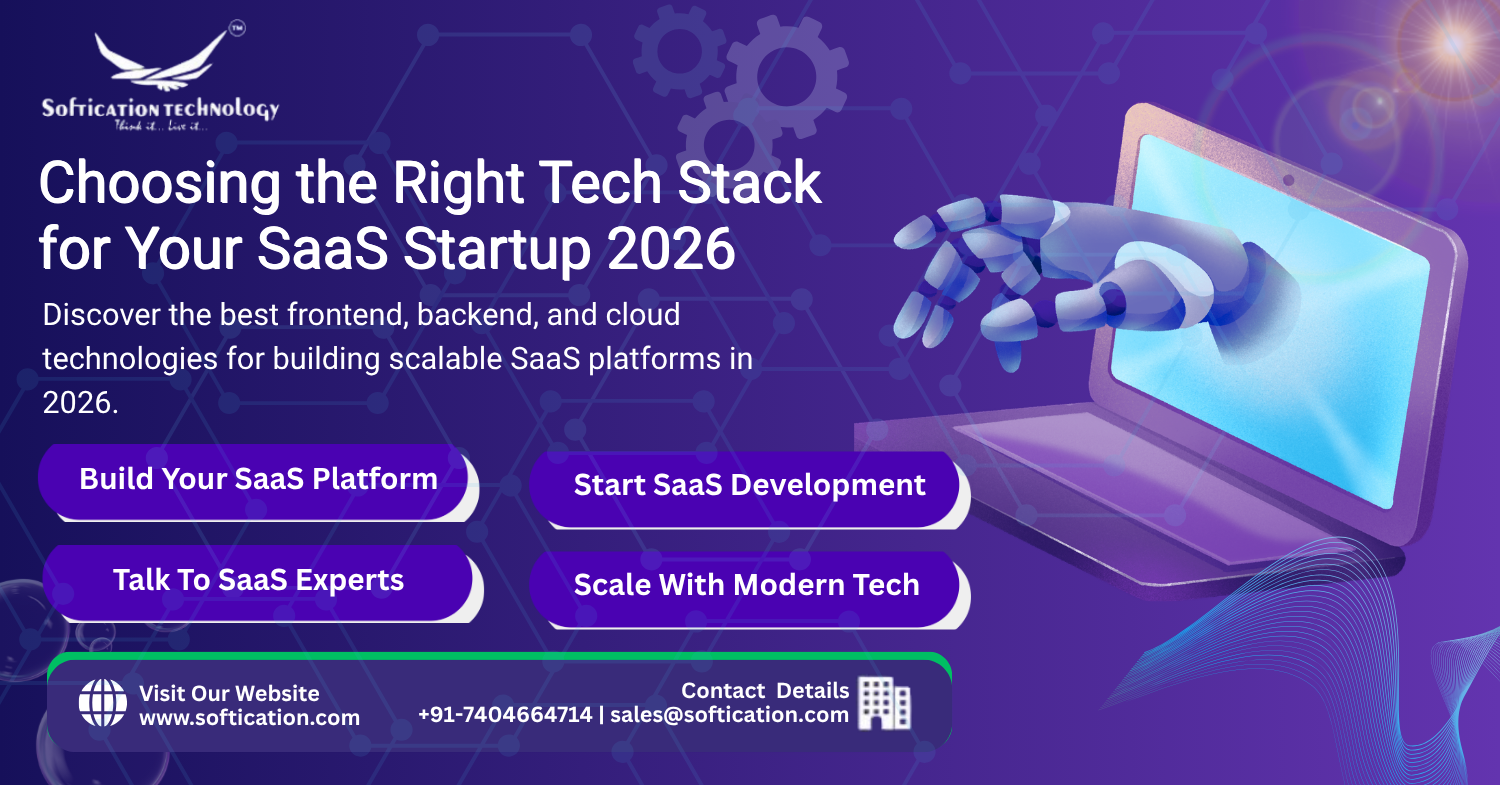
Building a successful SaaS startup in 2026 is no longer just about having a great idea. The technology stack you choose plays a critical role in your product’s scalability, performance, security, development speed, and long-term success.
For startups and growing SaaS businesses, selecting the right frontend, backend, and cloud infrastructure can directly impact development costs, product stability, user experience, and time-to-market.
Modern SaaS platforms are expected to be:
- Fast and scalable
- Cloud-native
- Secure
- Mobile responsive
- API-driven
- AI-ready
- Easy to maintain
That’s why CTOs and founders must carefully choose the best SaaS tech stack based on business goals, product complexity, and future scalability.
In this guide, we’ll explore the best technology stack choices for SaaS startups in 2026, including React, Next.js, Node.js, Python, Laravel, AWS, and Azure.
Why Choosing the Right SaaS Tech Stack Matters
Your technology stack impacts every stage of product development.
A poor stack choice can lead to:
- Scalability issues
- High infrastructure costs
- Slow performance
- Security vulnerabilities
- Difficult maintenance
- Delayed product launches
On the other hand, the right SaaS architecture helps startups:
✅ Build faster
✅ Scale efficiently
✅ Improve user experience
✅ Reduce operational costs
✅ Support future growth
✅ Integrate AI and cloud services easily
In today’s competitive SaaS market, technology decisions can determine whether a startup grows successfully or struggles with technical limitations.
What Is a SaaS Technology Stack?
A SaaS technology stack refers to the combination of technologies used to build and run a SaaS application.
It usually includes:
Frontend Technologies
The user-facing interface of the application.
Backend Technologies
The server-side logic and APIs.
Database Systems
Used to store and manage data.
Cloud Infrastructure
Hosting, deployment, and scalability systems.
DevOps & Security Tools
Monitoring, automation, and infrastructure management.
Frontend Technologies for SaaS Startups
The frontend directly impacts user experience, speed, and responsiveness.
In 2026, React and Next.js continue to dominate SaaS frontend development.
1. React for SaaS Applications
React remains one of the most popular frontend libraries for SaaS development.
Developed by Meta, React is widely used for scalable web applications.
Why Startups Choose React
✅ Fast performance
✅ Reusable components
✅ Large developer ecosystem
✅ Excellent scalability
✅ Strong community support
✅ Easy API integration
Best Use Cases
- SaaS dashboards
- CRM systems
- Enterprise applications
- Real-time platforms
- Analytics dashboards
React is ideal for startups building highly interactive SaaS platforms.
2. Next.js for Modern SaaS Platforms
Next.js is built on top of React and offers advanced features like:
- Server-side rendering (SSR)
- Static site generation (SSG)
- API routes
- SEO optimization
- Faster page loading
Why Next.js Is Popular in 2026
Better SEO
Important for SaaS landing pages and marketing sites.
Faster Performance
Improves user experience and Core Web Vitals.
Scalability
Handles large-scale applications efficiently.
Full-Stack Capabilities
Supports frontend and backend functionality together.
Many modern SaaS startups are choosing Next.js for performance-focused applications.
Backend Technologies for SaaS Development
The backend powers business logic, APIs, authentication, databases, and integrations.
The best backend technology depends on your SaaS requirements.
3. Node.js for Scalable SaaS Applications
Node.js is one of the top choices for modern SaaS backend development.
Benefits of Node.js
✅ Fast API performance
✅ Real-time capabilities
✅ Large package ecosystem
✅ JavaScript-based development
✅ Ideal for microservices architecture
Best For
- Real-time SaaS apps
- Chat applications
- Collaboration platforms
- API-heavy systems
- Scalable cloud applications
Node.js is highly popular among startups because it supports fast development cycles.
4. Python for AI-Powered SaaS Platforms
Python continues to grow rapidly due to AI and machine learning demand.
Why SaaS Companies Use Python
- AI & machine learning support
- Data analytics capabilities
- Automation features
- Fast development speed
- Powerful frameworks like Django & FastAPI
Best Use Cases
- AI SaaS platforms
- Automation tools
- Analytics software
- Predictive systems
- Data-heavy applications
Python is ideal for startups building AI-driven SaaS products in 2026.
5. Laravel for Secure SaaS Applications
Laravel is a powerful PHP framework widely used for custom SaaS platforms.
Laravel Advantages
✅ Rapid development
✅ Built-in security features
✅ Strong authentication systems
✅ Cost-effective development
✅ Clean architecture
Best For
- CRM platforms
- Business management software
- Internal enterprise systems
- Subscription-based platforms
Laravel remains a reliable choice for startups seeking fast and stable SaaS development.
Cloud Infrastructure for SaaS Startups
Cloud platforms are the foundation of scalable SaaS applications.
In 2026, AWS and Azure dominate cloud SaaS development.
6. AWS for Cloud SaaS Development
Amazon Web Services (AWS) is the world’s leading cloud platform.
AWS Benefits
- Global scalability
- High reliability
- Strong security infrastructure
- Advanced AI services
- Flexible pricing models
Popular AWS Services
- EC2
- S3
- Lambda
- RDS
- CloudFront
- ECS & Kubernetes
AWS is ideal for startups expecting rapid growth and global scalability.
7. Microsoft Azure for Enterprise SaaS
Azure is especially popular among enterprise SaaS businesses.
Why Startups Choose Azure
✅ Strong enterprise integrations
✅ Microsoft ecosystem compatibility
✅ Excellent security features
✅ Hybrid cloud capabilities
✅ AI & analytics services
Azure works well for B2B SaaS products targeting enterprise clients.
Choosing the Best SaaS Architecture
Modern SaaS startups are increasingly adopting cloud-native architectures.
Popular architecture approaches include:
Monolithic Architecture
Best for:
- MVPs
- Small startups
- Faster initial development
Advantages
- Simpler deployment
- Faster development
- Lower initial complexity
Microservices Architecture
Best for:
- Scaling SaaS platforms
- Enterprise applications
- Complex systems
Advantages
- Independent scaling
- Better flexibility
- Improved fault isolation
- Faster team collaboration
Many growing SaaS startups transition from monolithic to microservices as they scale.
Database Technologies for SaaS Platforms
Popular databases in 2026 include:
PostgreSQL
Excellent for scalable SaaS applications.
MongoDB
Ideal for flexible and document-based systems.
MySQL
Reliable and widely supported.
Redis
Used for caching and real-time performance optimization.
Choosing the right database depends on application structure and scalability requirements.
DevOps & Deployment for SaaS Startups
Modern SaaS companies rely heavily on DevOps automation.
Essential DevOps Tools
- Docker
- Kubernetes
- GitHub Actions
- Jenkins
- Terraform
- CI/CD pipelines
DevOps improves deployment speed, reliability, and scalability.
Security Considerations for SaaS Platforms
Security is critical for SaaS businesses handling customer data.
Important security practices include:
✅ Data encryption
✅ Secure authentication
✅ Role-based access control
✅ API security
✅ GDPR compliance
✅ Cloud monitoring
A secure SaaS architecture builds customer trust and protects business operations.
How to Choose the Right Tech Stack for Your Startup
Before selecting technologies, founders should evaluate:
Product Complexity
Simple MVPs need lighter architectures.
Budget
Cloud and infrastructure costs vary.
Scalability Goals
Choose technologies that support future growth.
Development Speed
Fast development is critical for startups.
AI & Automation Needs
AI-powered products may require Python-based ecosystems.
Team Expertise
Technology choices should align with developer skills.
Common Mistakes SaaS Startups Make
Many startups choose technologies based on trends instead of business needs.
Common Mistakes
- Overengineering MVPs
- Ignoring scalability
- Choosing unfamiliar technologies
- Poor cloud cost planning
- Weak security implementation
Strategic architecture planning prevents expensive technical debt later.
Future SaaS Technology Trends in 2026
Key trends shaping SaaS architecture include:
- AI-native SaaS platforms
- Serverless computing
- Edge computing
- Low-code integrations
- Cloud-native development
- Multi-cloud architectures
- Real-time SaaS applications
Startups adopting modern cloud SaaS development strategies will remain more competitive.
Final Thoughts
Choosing the right technology stack is one of the most important decisions for SaaS startups in 2026.
From React and Next.js frontend architectures to Node.js, Python, Laravel, AWS, and Azure cloud platforms, every technology choice impacts scalability, performance, development speed, and long-term success.
The best SaaS tech stack is not about following trends — it’s about selecting technologies that align with your business goals, product vision, and growth strategy.
A strong SaaS architecture creates the foundation for faster growth, better performance, and scalable innovation.
Frequently Asked Questions (FAQs)
What is the best SaaS tech stack in 2026?
Popular SaaS stacks include React, Next.js, Node.js, Python, Laravel, AWS, and Azure depending on the project requirements.
Why is React popular for SaaS applications?
React offers fast performance, reusable components, scalability, and excellent support for interactive SaaS platforms.
Which cloud platform is better for SaaS startups: AWS or Azure?
AWS is ideal for scalability and global infrastructure, while Azure is strong for enterprise integrations and Microsoft ecosystems.
Is Python good for SaaS development?
Yes, Python is excellent for AI-powered SaaS applications, automation platforms, analytics tools, and machine learning systems.
What architecture is best for SaaS startups?
Monolithic architecture works well for MVPs, while microservices architecture is better for scaling enterprise SaaS platforms.
Book Architecture Consultation
Planning to build a scalable SaaS platform in 2026?
SoftiCation helps startups and enterprises build high-performance SaaS applications with:
✅ React & Next.js Frontend Development
✅ Node.js, Python & Laravel Backend Solutions
✅ AWS & Azure Cloud Infrastructure
✅ Scalable SaaS Architecture
✅ DevOps & CI/CD Automation
✅ AI-Ready Cloud Applications
🚀 Book Your SaaS Architecture Consultation Today
📞 +91-7404664714
🌐 www.softication.com
✉️ sales@softication.com
Build scalable, secure, and future-ready SaaS platforms with expert architecture guidance.