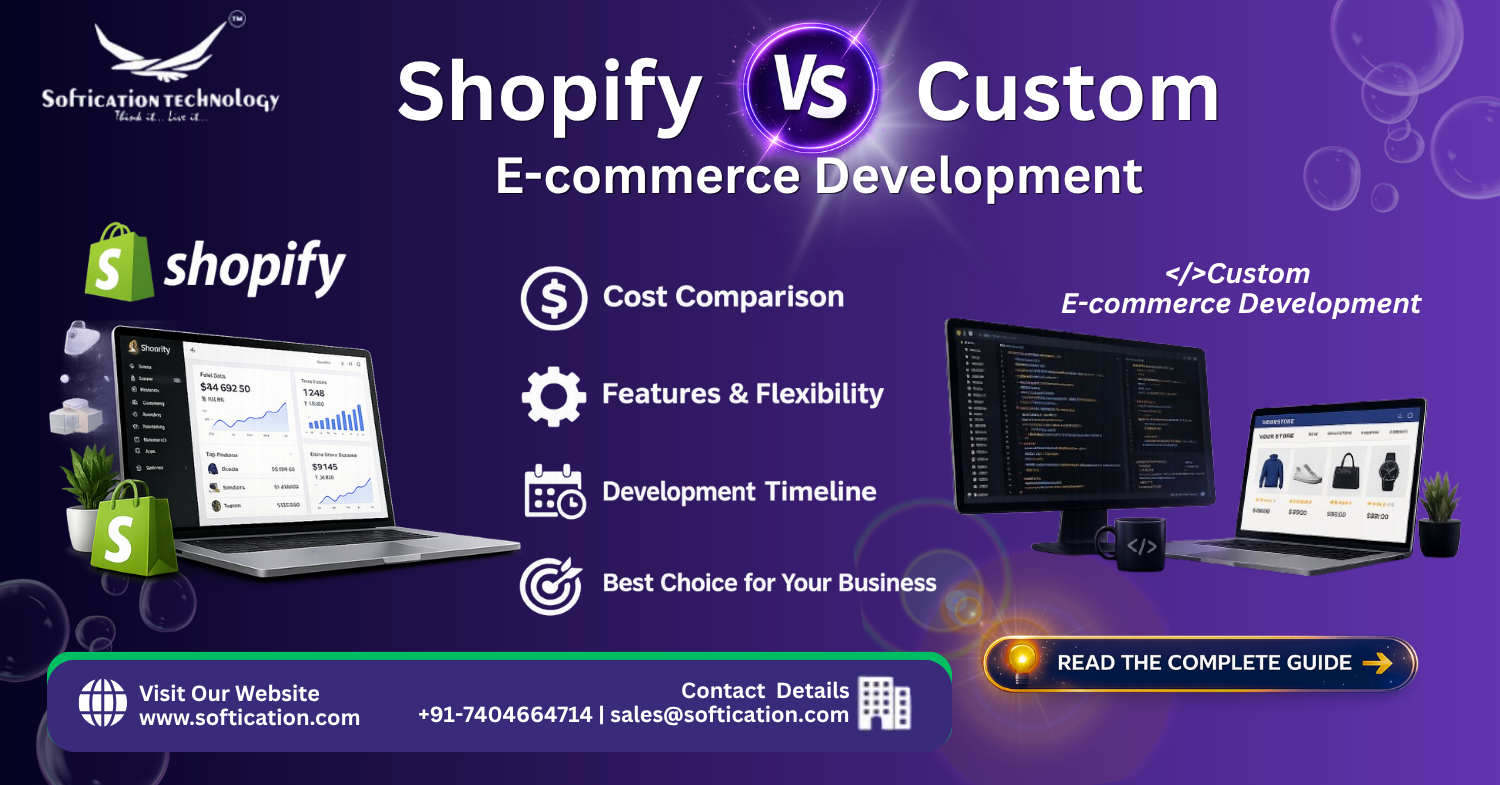
"Should we just use Shopify, or does this need to be custom-built?" is one of the first questions every e-commerce project runs into — and it's usually asked before anyone has fully defined what the business actually needs. Getting this decision right upfront saves real money and time; getting it wrong means either paying for flexibility you'll never use, or hitting platform limitations six months in that force a costly rebuild.
This post breaks down what each approach actually offers, where each one falls short, and a practical framework for figuring out which one your business genuinely needs — not which one sounds more impressive.
What Shopify Actually Offers
Shopify is a fully hosted e-commerce platform, meaning it handles infrastructure, security, PCI compliance, and uptime on your behalf. You're building on top of a proven system rather than assembling one from scratch.
Strengths:
- Speed to launch — a functional store can go live in weeks, not months, especially using existing themes
- Managed infrastructure — hosting, security patches, and PCI compliance are handled by Shopify, removing a significant ongoing responsibility
- App ecosystem — thousands of apps cover common needs (reviews, subscriptions, upsells, email marketing) without custom development
- Predictable costs — monthly platform fees plus app subscriptions are easier to budget than open-ended custom development
- Built-in reliability at scale — Shopify's infrastructure is built to handle high-traffic events (product drops, sales spikes) without the store owner needing to plan capacity themselves
Limitations:
- Customization ceiling — highly specific business logic, unusual product configurators, or non-standard checkout flows can hit real constraints within Shopify's architecture
- App cost accumulation — a store relying on 10-15 paid apps can end up with meaningful recurring costs that aren't obvious at the start
- Platform dependency — your store's functionality is ultimately bounded by what Shopify and its app ecosystem support, which matters if your business has unusual requirements
- Data and integration constraints — deep integrations with internal systems (custom ERPs, proprietary inventory tools) can be harder to achieve cleanly than with a fully custom backend
What Custom Development Actually Offers
Custom e-commerce development means building the platform — frontend, backend, or both — specifically for your business logic, rather than configuring an existing platform.
Strengths:
- No architectural ceiling — if your business has genuinely unusual requirements (complex pricing logic, unique product configurators, tight internal system integrations), custom development removes the constraints of building around someone else's platform
- Full control over performance — a custom-built frontend can be optimized specifically for your traffic patterns and use case, without inheriting a platform's general-purpose overhead
- Ownership of the codebase — you're not dependent on a third-party platform's roadmap, pricing changes, or policy shifts
- Tailored integrations — internal systems, proprietary data, and unusual workflows can be built to fit exactly, rather than adapted to a platform's existing integration options
Limitations:
- Higher cost and longer timeline — custom builds typically cost 3-5x more than a comparable platform-based store and take significantly longer to launch
- Ongoing maintenance responsibility — security patching, uptime, and infrastructure management become your responsibility (or your dev team's), rather than being handled by a platform provider
- Slower to add standard features — functionality that's a one-click app install on Shopify (a review widget, a loyalty program) needs to be built or integrated manually on a custom platform
- Requires ongoing technical relationship — custom platforms generally need continued developer involvement for updates, fixes, and new features, rather than being manageable by non-technical staff
The Real Decision Framework
Rather than starting from "which platform is better," the more useful question is: does your business have a specific, well-defined requirement that Shopify genuinely cannot support?
Choose Shopify if:
- Your product catalog and business logic fit reasonably standard e-commerce patterns (even if you have some specific needs, most can be met through apps or Shopify's customization options)
- You want to launch quickly and iterate based on real customer behavior rather than a long development cycle
- You don't have dedicated in-house engineering resources to maintain a custom platform long-term
- Predictable, capped monthly costs matter more than owning the full technology stack
Choose custom development if:
- You have specific, well-documented business logic that doesn't fit Shopify's data model or checkout flow, even with apps layered on top
- You need deep, real-time integration with internal systems that off-the-shelf connectors don't support well
- Your traffic or catalog scale has genuinely outgrown what a platform-based store can handle efficiently
- You have (or are hiring) the engineering resources to maintain a custom platform long-term, not just to build it once
A useful gut check: most businesses that believe they need custom development actually have requirements that fit within Shopify's app ecosystem and customization options — they just haven't fully explored what's available yet. Before committing to a custom build, it's worth a genuine audit of whether Shopify (potentially with a few well-chosen apps or a Shopify Plus plan for advanced needs) can meet 90% of the requirement, with only a small, specific gap requiring anything beyond the platform.
The Middle Ground: Shopify Plus and Headless Shopify
It's worth noting the decision isn't strictly binary. Two middle-ground options exist:
- Shopify Plus offers more customization flexibility, higher API limits, and support for more complex checkout customization than standard Shopify plans, without the full cost and maintenance burden of a fully custom platform.
- Headless Shopify uses Shopify as the backend (product, inventory, checkout) while building a fully custom frontend, giving more design and performance flexibility while retaining Shopify's managed backend infrastructure.
These options are worth evaluating before defaulting to a fully custom build, since they can close much of the gap between standard Shopify and custom development at a fraction of the cost.
Cost and Timeline Comparison
| Factor | Shopify (Standard/Plus) | Fully Custom Development |
|---|---|---|
| Typical build cost | $3,000 – $20,000 | $25,000 – $80,000+ |
| Typical timeline | 3–8 weeks | 12–24 weeks |
| Ongoing platform cost | Monthly subscription + apps | Hosting + maintenance (variable) |
| Maintenance responsibility | Largely handled by Shopify | Your team or dev partner |
| Customization ceiling | Bounded by platform + apps | No architectural ceiling |
The Bottom Line
The right answer isn't "Shopify is easier" or "custom is more powerful" — it's whichever one matches what your business genuinely requires versus what sounds more sophisticated. Most stores are well served by Shopify, potentially with Shopify Plus or a headless frontend for more advanced needs. Custom development earns its higher cost and longer timeline only when there's a specific, well-documented business requirement that a platform-based approach can't reasonably meet — not as a default choice for stores that simply want to appear more custom.
FAQ: Shopify vs Custom E-commerce Development
Is Shopify good enough for a growing e-commerce business, or will I eventually need custom development? Shopify, especially with Shopify Plus, scales well for the large majority of growing businesses. Custom development only becomes necessary when a business has specific logic or integration needs that genuinely can't be met through the platform and its app ecosystem, which is less common than many founders assume.
How much more does custom e-commerce development cost compared to Shopify? Custom development typically costs 3-5x more than a comparable Shopify build, with standard custom stores running $25,000–$80,000+ compared to $3,000–$20,000 for a Shopify-based store of similar scope.
Can I switch from Shopify to a custom platform later if I outgrow it? Yes, migration from Shopify to a custom platform is a common path, though it requires careful planning around data migration, SEO preservation, and redirect management to avoid disrupting existing traffic and rankings.
What is headless Shopify and is it a good middle ground? Headless Shopify uses Shopify's backend for product and order management while allowing a fully custom frontend. It's a strong middle-ground option for businesses that want more design and performance flexibility without giving up Shopify's managed backend infrastructure.
How do I know if my business actually needs custom development? Start by auditing whether Shopify, potentially combined with apps or a Shopify Plus plan, can meet your core requirements. Custom development is justified only when there's a specific, well-documented gap — not simply a preference for having a fully proprietary platform.