In 2027, an e-commerce website costs anywhere from $500 to $150,000+ (roughly ₹40,000 to ₹1 crore+), depending on platform, design, features, integrations, and scale. Most growing businesses land between $5,000 and $30,000 (₹4 lakh to ₹25 lakh) for a store that is fast, secure, and built to convert.
But the price tag is only half the story. Keep reading to see exactly where your money goes, which costs most agencies don’t mention, and how to avoid overpaying.
💡 Want an exact number for your store? [Get a free, no-obligation e-commerce quote from SoftiCation →]
The Problem: Most Businesses Budget for the Wrong Thing
Almost every founder starts with one question: “What will the website cost?”
The better question is: “What will it cost me if the website is built wrong?”
Here is what we see again and again:
- A store is built on the cheapest template available.
- The budget covers design, but not speed, SEO, security, or scalability.
- The site launches and looks fine, but traffic doesn’t convert.
- Six months later, the business is paying again to rebuild.
Vague quotes, hidden add-ons, and “unlimited features for ₹15,000” promises make e-commerce pricing confusing. That confusion is expensive.
The Business Consequence: A Cheap Website Is the Costliest Mistake
A poorly planned e-commerce site doesn’t just waste development money. It quietly drains revenue:
- Slow load times: Even a 1-second delay can reduce conversions noticeably, and mobile shoppers abandon slow stores quickly.
- Poor checkout UX: The average cart abandonment rate hovers around 70%, and a clunky checkout pushes it higher.
- Weak SEO foundation: If product pages aren’t structured for search, you pay for ads forever instead of earning organic traffic.
- Security gaps: One breach can mean lost customer trust, payment-gateway issues, and legal exposure.
- Rebuild costs: Migrating a failed store often costs 1.5x to 2x the original build.
The real cost of a cheap e-commerce website = build cost + lost sales + rebuild cost.
🚀 Don’t pay twice. [Talk to SoftiCation’s e-commerce experts before you commit your budget →]
E-Commerce Website Cost in 2027: Pricing by Type
| Store Type | Best For | Estimated Cost (USD) | Estimated Cost (INR) | Timeline |
|---|---|---|---|---|
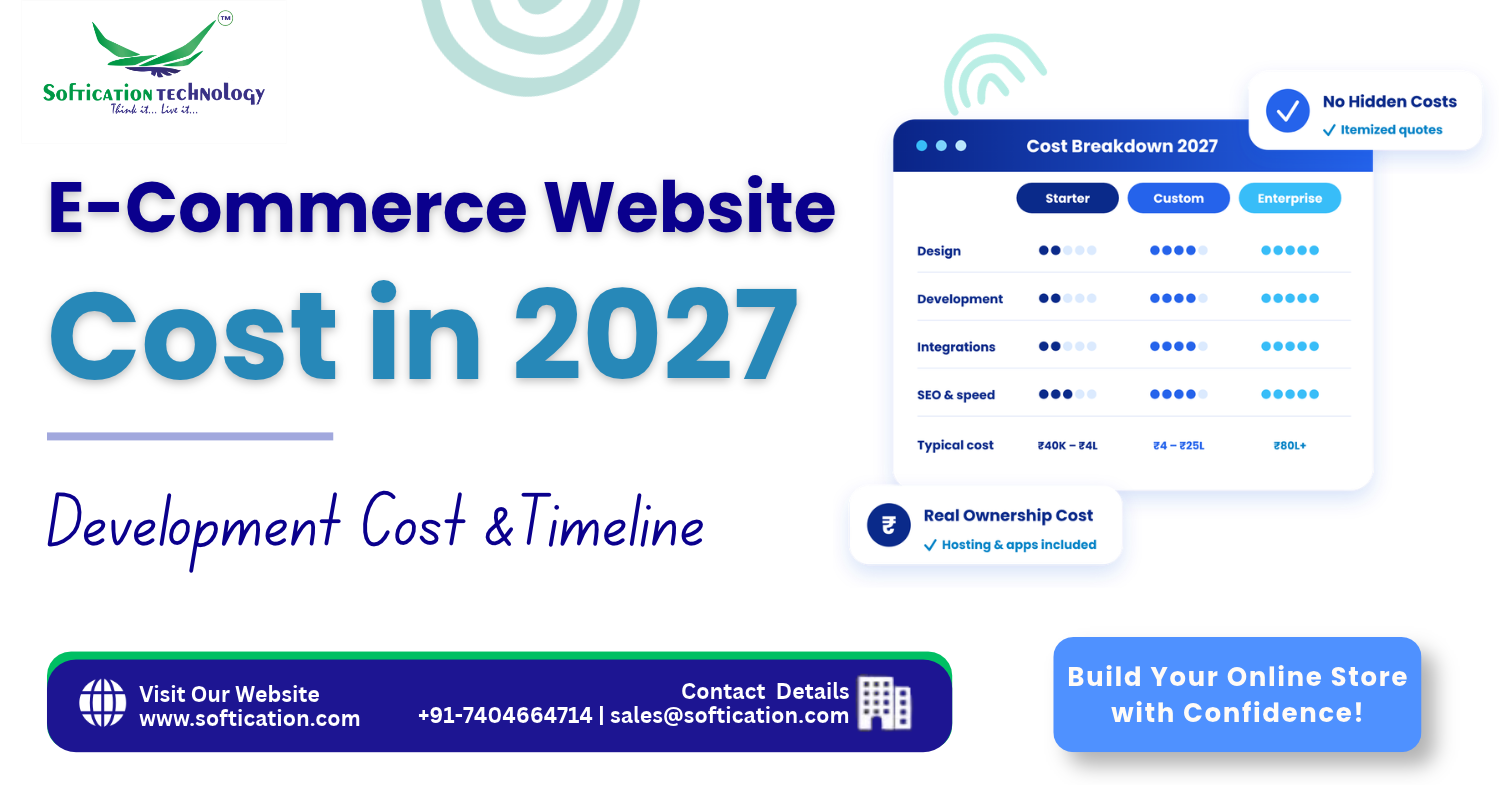
| Starter Store (Shopify/WooCommerce + premium theme) | New brands, small catalogs (under 50 products) | $500 – $5,000 | ₹40,000 – ₹4 lakh | 2–4 weeks |
| Custom Mid-Range Store | Growing D2C brands, 100–5,000 products | $5,000 – $30,000 | ₹4 – 25 lakh | 6–12 weeks |
| Advanced / Headless Commerce | High-traffic brands needing speed and flexibility | $30,000 – $80,000 | ₹25 – 65 lakh | 3–5 months |
| Marketplace / Multi-Vendor Platform | Amazon-style platforms with many sellers | $50,000 – $150,000+ | ₹40 lakh – 1 crore+ | 4–8 months |
| Enterprise E-Commerce | Large catalogs, ERP/CRM integrations, multi-country | $100,000+ | ₹80 lakh+ | 6–12 months |
These are indicative ranges based on typical market pricing. Actual cost depends on scope. Verify against a detailed quote.
Detailed Cost Breakdown: Where Your Money Actually Goes
1. Platform and Technology Choice ($0 – $50,000+)
- Shopify: Monthly plans plus app costs. Fast to launch, less flexible for complex needs.
- WooCommerce: Free core, but hosting, plugins, and customization add up.
- Magento / Adobe Commerce: Powerful but costly for large catalogs.
- Custom / Headless (React, Next.js, Node.js): Highest upfront cost, best long-term performance and control.
2. UI/UX Design ($500 – $15,000)
Template customization is cheap. A custom, conversion-focused design built around your customer journey costs more but typically pays back through higher conversion rates.
3. Development and Core Features ($1,000 – $40,000)
Product catalogs, filters and search, cart and checkout, user accounts, wishlists, reviews, discount engines, subscriptions, and multi-currency support all add scope.
4. Payment Gateway and Shipping Integrations ($300 – $5,000)
Razorpay, PayU, Stripe, PayPal, UPI, COD, Shiprocket, Delhivery. Each integration adds setup effort, plus transaction fees (typically around 2–3% per payment).
5. SEO and Performance Optimization ($500 – $8,000)
Technical SEO, schema markup, site speed, Core Web Vitals, URL structure, and category/product page optimization. This is the line item cheap quotes usually skip.
6. Security and Compliance ($300 – $5,000)
SSL, PCI-DSS-aligned practices, data protection, backups, and firewall setup.
7. Third-Party Integrations ($500 – $20,000)
ERP, CRM, inventory management, email marketing, WhatsApp, analytics, and loyalty tools.
8. Content, Photography, and Product Uploads ($200 – $5,000)
Bulk product uploads, descriptions, and imagery.
Hidden Costs Most Agencies Won’t Tell You About
Budget for these after launch too:
- Maintenance and support: Typically 15–20% of build cost per year.
- Hosting and CDN: $20 – $500+/month depending on traffic.
- Plugin and app subscriptions: Can quietly reach $100–$1,000+/month.
- Payment gateway fees: Around 2–3% of every transaction.
- Marketing and SEO: A store with no traffic earns nothing.
- Upgrades and scaling: Traffic spikes during sales need infrastructure planning.
📞 Not sure what your total cost of ownership will be? [Book a free 30-minute e-commerce consultation with SoftiCation →]
The Solution: Build the Store Around Revenue, Not Just Design
The smartest way to budget is to start from business outcomes:
- Define goals: Target monthly orders, average order value, and growth plan.
- Pick the right platform for your stage: Not the cheapest, not the fanciest.
- Invest first in what drives revenue: Speed, checkout UX, SEO, and trust signals.
- Build in phases: Launch a strong MVP, then scale features based on real data.
- Plan for post-launch: Maintenance, analytics, and conversion optimization.
This approach avoids both overspending on features you don’t need and underspending on the foundations that make sales happen.
How SoftiCation Builds E-Commerce Websites That Pay for Themselves
At SoftiCation, we don’t just deliver a website. We build a sales system. Here’s what you get:
- ✅ Strategy-first discovery: We map your customers, catalog, and revenue goals before design starts.
- ✅ Custom, conversion-focused UI/UX: Designed around how your buyers actually shop.
- ✅ Scalable development: Shopify, WooCommerce, or custom/headless builds, chosen for your stage, not our convenience.
- ✅ Built-in SEO and speed optimization: Technical SEO and Core Web Vitals handled from day one.
- ✅ Secure payments and integrations: Gateways, shipping, ERP, CRM, and WhatsApp connected cleanly.
- ✅ Transparent, itemized pricing: No vague lump sums, no surprise add-ons.
- ✅ Post-launch support and growth: Maintenance, analytics, and ongoing optimization.
🎯 See what a revenue-first e-commerce build looks like. [Request your custom proposal from SoftiCation →]
📈 Want results like these for your brand? [Start your e-commerce project with SoftiCation →]
Shopify vs. Custom E-Commerce: Which Is Right for Your Budget?
| Factor | Shopify / WooCommerce | Custom / Headless |
|---|---|---|
| Upfront cost | Low to medium | Medium to high |
| Launch speed | Fast | Slower |
| Flexibility | Moderate | Very high |
| Scalability | Good up to a point | Excellent |
| Best for | Startups, D2C brands | Scaling brands, complex needs |
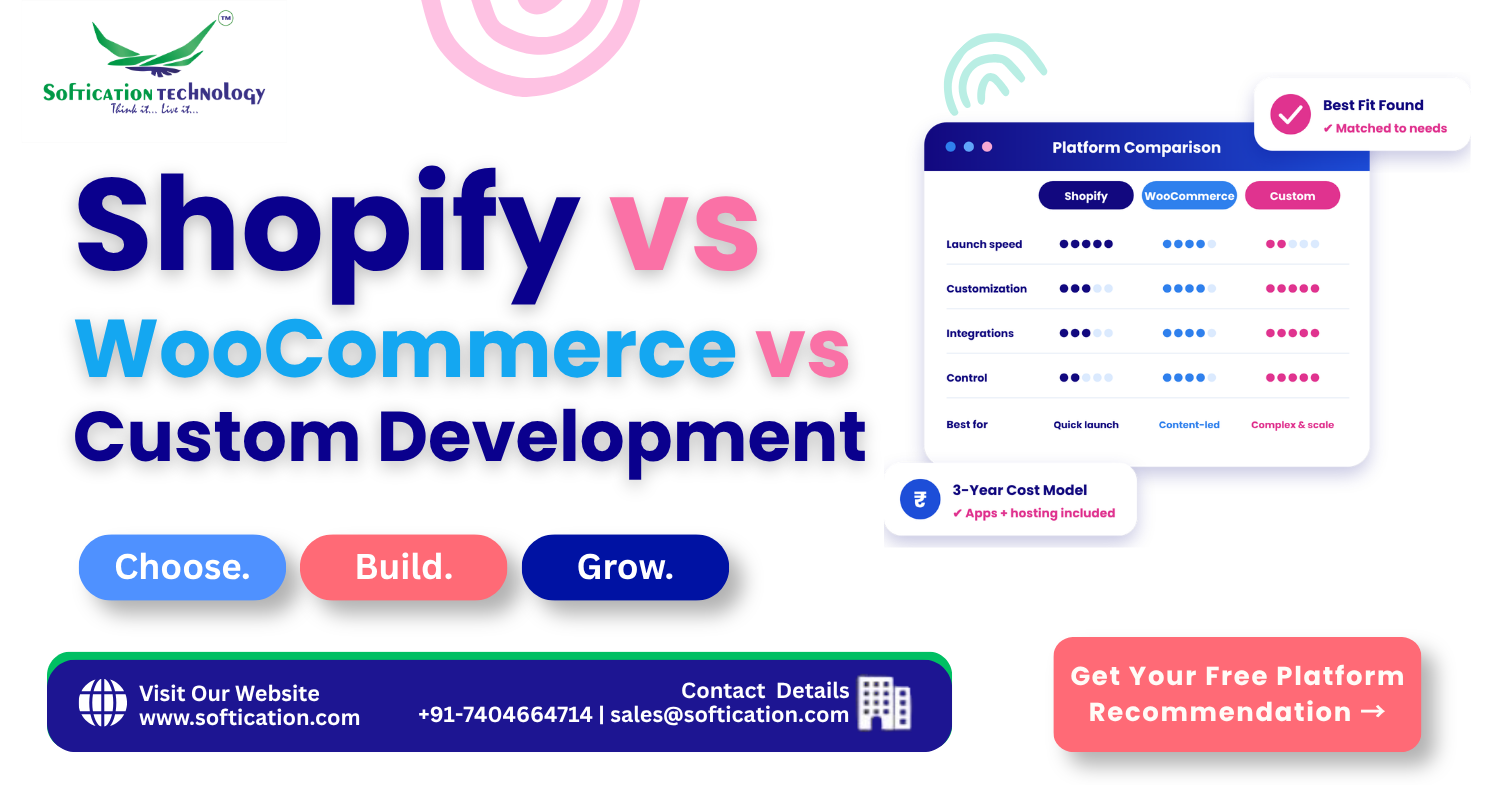
Rule of thumb: Start with a strong Shopify or WooCommerce build if you’re validating a product. Go custom when your processes, scale, or experience demands outgrow templates. SoftiCation can help you decide, honestly.
7 Smart Ways to Reduce E-Commerce Development Cost (Without Hurting Quality)
- Launch an MVP and add features in phases.
- Choose the platform that matches your current stage.
- Prioritize features by revenue impact.
- Reuse proven components instead of reinventing them.
- Prepare content and product data in advance.
- Avoid plugin overload, which hurts speed and security.
- Work with one team for design, development, and SEO to cut coordination cost.
Frequently Asked Questions (FAQs)
1. How much does an e-commerce website cost in India in 2027?
Basic stores start around ₹40,000 to ₹4 lakh, mid-range custom stores cost ₹4 to 25 lakh, and enterprise or marketplace platforms can go from ₹40 lakh to over ₹1 crore.
2. How long does it take to build an e-commerce website?
Starter stores take 2–4 weeks. Custom builds take 6–12 weeks, and complex platforms can take 4–12 months.
3. Is Shopify cheaper than a custom e-commerce website?
Upfront, yes. Long term, high-volume stores may find custom solutions more cost-effective because of lower app and transaction dependency, though this depends on your case.
4. What are the ongoing costs of running an e-commerce store?
Hosting, maintenance, plugins/apps, payment fees, security, and marketing. Budget roughly 15–20% of the build cost annually for maintenance alone.
5. Can I build an e-commerce website in phases?
Yes, and we recommend it. Launch core features first, then scale using real customer data.
6. Does SoftiCation provide SEO with e-commerce development?
Yes. Technical SEO and performance optimization are part of our build process, not an afterthought. (Edit to match your actual service scope.)
7. How do I get an accurate quote?
Share your product count, required features, integrations, and goals. [Get a free itemized quote from SoftiCation →]
Final Thoughts: The Right Budget Is the One That Grows Your Revenue
In 2027, e-commerce competition is tougher, customers are less patient, and search and ad costs keep rising. The cheapest website rarely wins, and the most expensive one isn’t always necessary. The winning move is a well-planned, performance-focused, scalable store built for your actual business goals.