Introduction
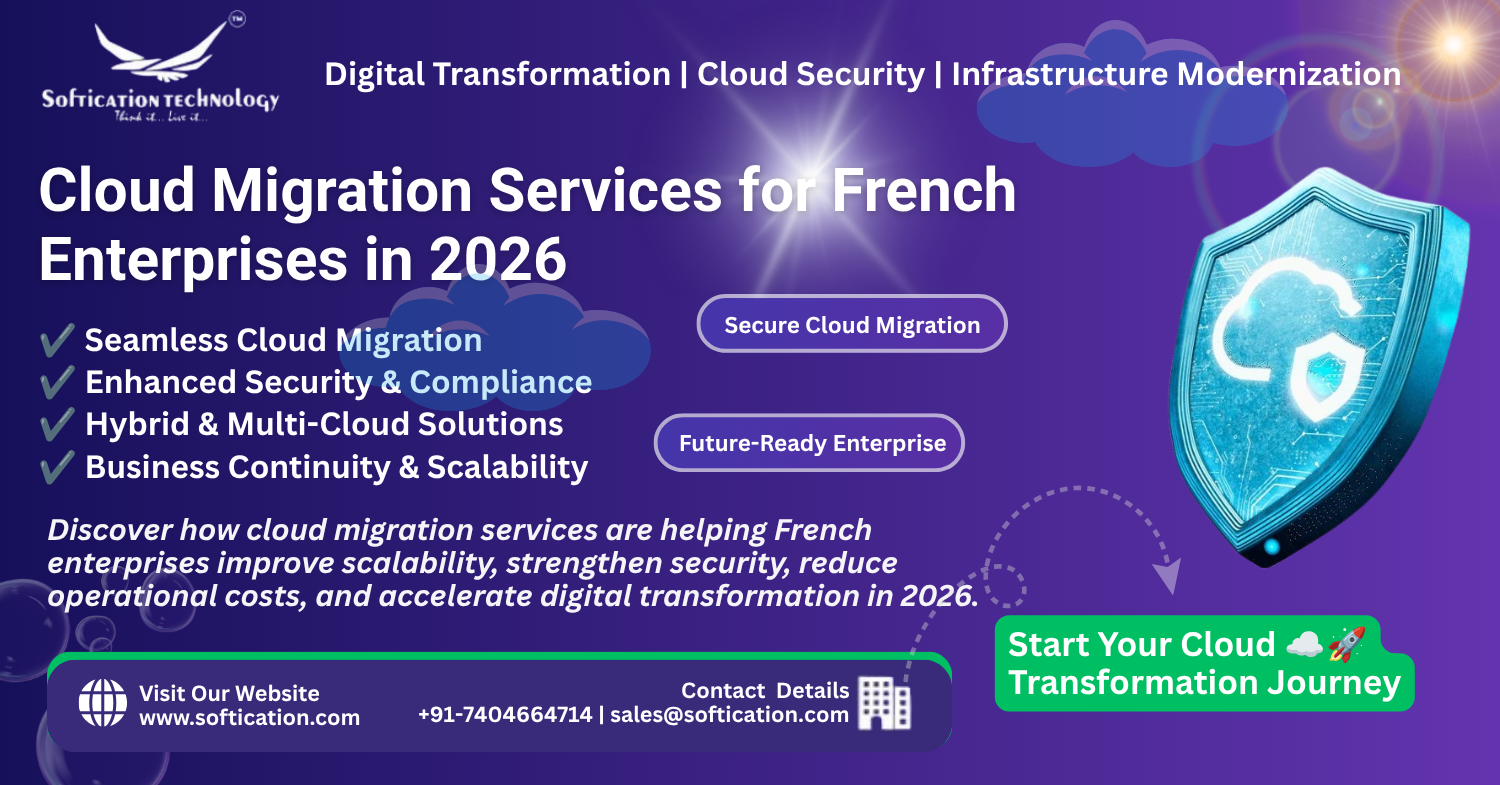
As French enterprises continue to embrace digital transformation, cloud migration has become a strategic priority rather than a technological upgrade. In 2026, organizations across France are moving their applications, databases, and business operations to cloud environments to improve efficiency, enhance security, reduce infrastructure costs, and support long-term growth.
From small and medium-sized businesses to large enterprises, cloud migration services are helping organizations modernize legacy systems, enable remote collaboration, and achieve greater business agility. With increasing competition and evolving customer expectations, cloud adoption is now essential for businesses seeking sustainable growth and innovation.
This guide explores the importance of cloud migration services for French enterprises in 2026, key benefits, migration strategies, challenges, and best practices for successful cloud transformation.
What Are Cloud Migration Services?
Cloud migration services involve moving digital assets such as applications, databases, workloads, and IT infrastructure from on-premise environments or legacy systems to cloud-based platforms.
A successful cloud migration strategy typically includes:
- Infrastructure assessment
- Migration planning
- Data transfer and synchronization
- Application modernization
- Security implementation
- Compliance management
- Performance optimization
- Ongoing cloud support and maintenance
Organizations can migrate to public, private, hybrid, or multi-cloud environments depending on their business requirements and regulatory obligations.
Why French Enterprises Are Prioritizing Cloud Migration in 2026
French businesses are operating in an increasingly digital economy where flexibility, scalability, and data accessibility are crucial.
Key factors driving cloud migration include:
1. Digital Transformation Initiatives
Businesses are investing heavily in digital technologies to improve customer experiences, automate processes, and accelerate innovation.
2. Cost Optimization
Cloud platforms eliminate large upfront infrastructure investments and allow companies to pay only for the resources they use.
3. Remote and Hybrid Work Support
Modern cloud environments provide secure access to business applications from anywhere, enabling productive hybrid work models.
4. Enhanced Security
Leading cloud providers offer advanced security features including encryption, threat monitoring, disaster recovery, and identity management.
5. Scalability and Flexibility
Cloud resources can scale instantly according to business demands, making it easier to handle seasonal traffic spikes and growth opportunities.
Benefits of Cloud Migration for French Enterprises
Improved Operational Efficiency
Cloud-based systems automate infrastructure management tasks, allowing IT teams to focus on innovation and strategic projects.
Reduced IT Costs
Organizations can significantly reduce expenses associated with hardware maintenance, software upgrades, energy consumption, and data center operations.
Faster Innovation
Development teams can deploy applications more quickly using cloud-native tools, DevOps practices, and automated workflows.
Better Business Continuity
Cloud platforms offer robust backup and disaster recovery solutions that minimize downtime and data loss.
Enhanced Collaboration
Employees can securely access files, applications, and business systems from any location, improving productivity and teamwork.
Stronger Compliance Management
Cloud providers support compliance frameworks that help French businesses meet regulatory and data protection requirements.
Popular Cloud Migration Models
Rehosting (Lift and Shift)
Applications are moved to the cloud with minimal modifications, making it the fastest migration approach.
Replatforming
Applications are optimized for cloud environments while maintaining their core architecture.
Refactoring
Applications are redesigned to fully leverage cloud-native capabilities such as microservices and containerization.
Hybrid Cloud Migration
Businesses maintain a combination of on-premise and cloud environments for greater flexibility and compliance.
Multi-Cloud Strategy
Organizations utilize multiple cloud providers to reduce dependency on a single vendor and improve resilience.
Key Challenges in Cloud Migration
While cloud migration offers substantial advantages, enterprises must address several challenges:
Data Security Concerns
Sensitive business information requires strong encryption, access controls, and continuous monitoring.
Legacy System Compatibility
Older applications may require modernization before successful migration.
Downtime Risks
Poor planning can result in service disruptions during migration processes.
Cost Management
Without proper governance, cloud expenses can grow unexpectedly.
Skills and Expertise Gaps
Many organizations require specialized cloud migration experts to ensure successful implementation.
Best Practices for Successful Cloud Migration
Conduct a Comprehensive Assessment
Evaluate existing infrastructure, applications, dependencies, and business objectives before migration.
Develop a Clear Migration Roadmap
Create a phased migration strategy with measurable goals, timelines, and risk management plans.
Prioritize Security
Implement encryption, identity management, access controls, and continuous monitoring from the beginning.
Optimize Cloud Resources
Regularly monitor usage and performance to avoid unnecessary costs and maximize efficiency.
Train Teams and Stakeholders
Provide employees with the knowledge and tools needed to adapt to cloud-based workflows.
Partner with Experienced Cloud Experts
Working with professional cloud migration service providers reduces risks and accelerates project success.
Emerging Cloud Migration Trends in France for 2026
Several trends are shaping cloud adoption across French enterprises:
- AI-powered cloud management and automation
- Increased adoption of hybrid and multi-cloud architectures
- Cloud-native application development
- Enhanced cybersecurity solutions
- Edge computing integration
- Sustainable and energy-efficient cloud infrastructure
- Advanced data analytics and business intelligence platforms
Organizations that embrace these innovations will be better positioned to remain competitive and responsive to market changes.
How Cloud Migration Supports Business Growth
Cloud migration is no longer just an IT initiative—it is a business growth strategy. Modern cloud environments enable organizations to:
- Launch products faster
- Improve customer experiences
- Scale operations efficiently
- Increase workforce productivity
- Enhance decision-making through real-time data access
- Adapt quickly to changing market demands
For French enterprises aiming to remain competitive in 2026 and beyond, cloud migration provides the foundation for innovation and long-term success.
Conclusion
Cloud migration services are transforming how French enterprises operate, innovate, and compete in the digital era. By moving critical workloads and applications to secure, scalable cloud environments, businesses can reduce costs, improve operational efficiency, strengthen security, and accelerate digital transformation.
As technology continues to evolve, organizations that invest in strategic cloud migration today will be better prepared for future challenges and opportunities. Whether adopting a public, private, hybrid, or multi-cloud approach, a well-planned migration strategy can unlock significant business value and create a foundation for sustainable growth in 2026 and beyond.
Ready to modernize your business infrastructure? Professional cloud migration services can help your organization achieve secure, scalable, and future-ready digital transformation.
Frequently Asked Questions (FAQs)
1. What are cloud migration services?
Cloud migration services involve moving applications, databases, workloads, and IT infrastructure from on-premise systems or legacy environments to cloud platforms. These services help businesses improve scalability, security, performance, and operational efficiency.
2. Why are French enterprises investing in cloud migration in 2026?
French enterprises are adopting cloud migration to support digital transformation, reduce IT costs, improve business agility, enhance cybersecurity, enable remote work, and leverage advanced technologies such as AI, automation, and data analytics.
3. What are the main benefits of cloud migration for businesses?
Key benefits include:
- Reduced infrastructure and maintenance costs
- Improved scalability and flexibility
- Enhanced security and disaster recovery
- Faster application deployment
- Better collaboration and productivity
- Increased business continuity
4. How long does a cloud migration project take?
The timeline depends on the size and complexity of the organization’s infrastructure. Small migrations may take a few weeks, while large enterprise migrations can take several months to complete successfully.
5. What types of cloud environments can businesses migrate to?
Businesses can choose from:
- Public Cloud
- Private Cloud
- Hybrid Cloud
- Multi-Cloud
The best option depends on security, compliance, performance, and business requirements.
6. Is cloud migration secure?
Yes. When implemented correctly, cloud migration can improve security through data encryption, multi-factor authentication, access controls, continuous monitoring, and advanced threat protection offered by leading cloud providers.
7. What challenges can enterprises face during cloud migration?
Common challenges include:
- Legacy system compatibility issues
- Data security concerns
- Downtime risks
- Cost management
- Lack of cloud expertise
- Compliance and regulatory requirements
8. How can businesses reduce cloud migration risks?
Organizations should conduct a detailed assessment, create a migration roadmap, perform regular testing, implement strong security measures, and work with experienced cloud migration professionals.
9. Which industries in France benefit most from cloud migration?
Cloud migration benefits various industries, including:
- Finance and Banking
- Healthcare
- Manufacturing
- Retail and E-commerce
- Education
- Logistics and Transportation
- Technology and SaaS Companies
10. How does cloud migration support digital transformation?
Cloud migration provides the foundation for digital transformation by enabling automation, real-time collaboration, scalable infrastructure, advanced analytics, AI integration, and faster innovation across business operations.
11. What is the difference between cloud migration and cloud modernization?
Cloud migration focuses on moving existing systems to the cloud, while cloud modernization involves optimizing or redesigning applications to fully utilize cloud-native technologies and services.
12. Why should enterprises partner with a professional cloud migration service provider?
Professional cloud migration experts help organizations plan, execute, secure, and optimize migrations efficiently while minimizing downtime, reducing risks, ensuring compliance, and maximizing return on investment (ROI).
📞 +91-7404664714
🌐 https://www.softication.com